
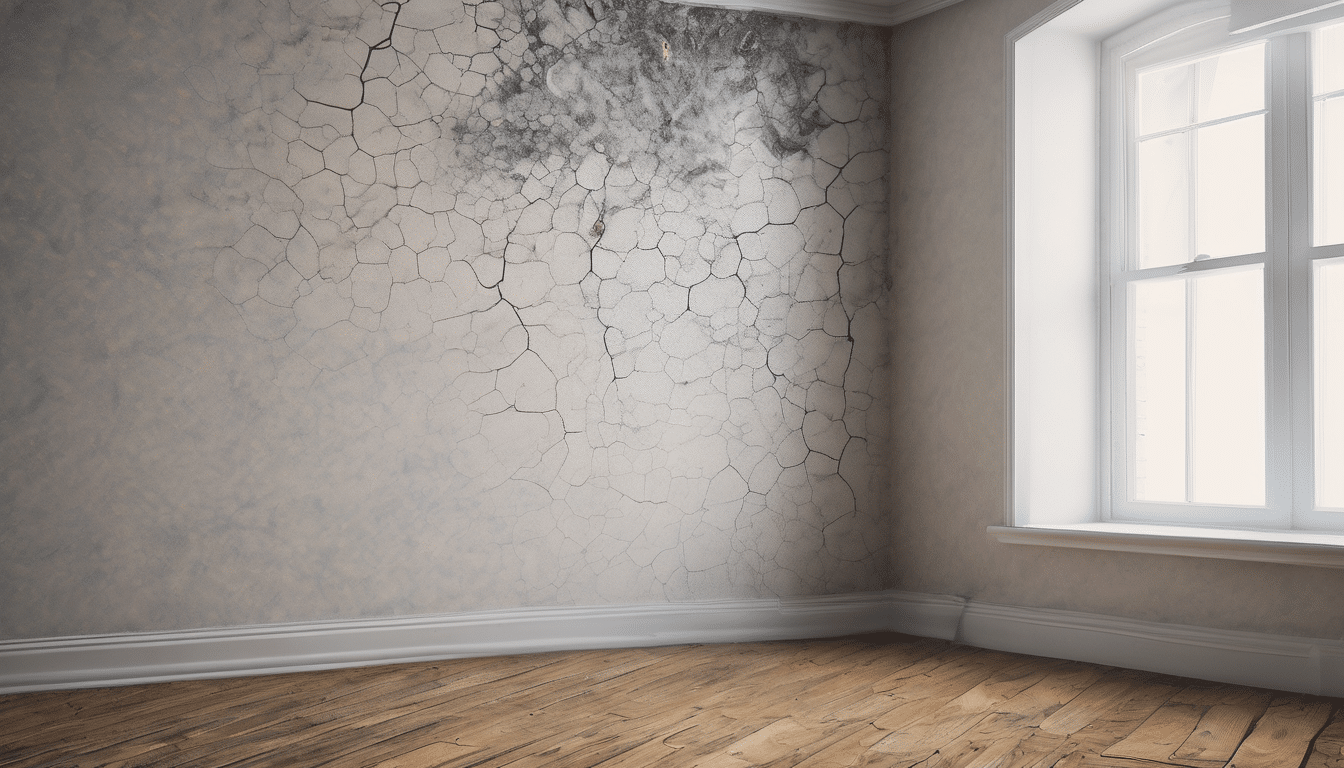
Moisture mapping before mold remediation begins is not a preliminary formality. It is the diagnostic foundation upon which every subsequent decision rests. In Dubai and across the UAE, where ambient humidity regularly exceeds 70% and buildings rely almost entirely on mechanical cooling to maintain liveable conditions, moisture problems are rarely confined to where mold is visibly growing. They extend further, penetrate deeper, and follow pathways that only systematic measurement can reveal.
In over 20 years of investigating indoor environments across the region, I have seen remediation projects fail repeatedly — not because the mold removal was poorly executed, but because the moisture was never properly mapped before work began. Contractors removed visible growth, applied antifungal treatments, and reconstructed affected areas, only to watch mold return within weeks. Every single time, the root cause was the same: moisture that was never found, because it was never looked for with the right tools and methodology. This relates directly to Moisture Mapping Before Mold Remediation Begins.
This guide is written for property owners, facility managers, and professionals who want to make better decisions about mold remediation. It covers what moisture mapping actually involves, which tools and features matter, what mistakes to avoid, and how to identify a qualified provider in the UAE market.
Moisture Mapping Before Mold Remediation Begins – What Is Moisture Mapping and Why It Comes First
Moisture mapping is a systematic process of measuring and documenting moisture levels across building materials, surfaces, and concealed cavities throughout a property. The objective is to establish a complete moisture profile of the affected area — not just the wall or ceiling where mold is visible, but the entire hygrothermal system that produced the condition.
Mold is a biological indicator. Its presence signals that moisture has been sustained at elevated levels in a specific location for long enough to support fungal colonisation. Removing the mold without understanding the full extent and origin of the moisture is equivalent to treating a symptom without diagnosing the illness.
Moisture mapping before mold remediation begins answers three critical questions. First, where is moisture elevated beyond safe thresholds? Second, how far does the affected zone extend beyond what is visually apparent? Third, is the moisture source active, or has it already resolved? Each of these questions directly determines what remediation is needed, how much material must be addressed, and whether remediation will be durable.
Moisture Mapping Before Mold Remediation Begins – Tools Used in Professional Moisture Mapping
The quality of moisture mapping depends almost entirely on the tools used and the expertise of the person interpreting the data. Not all moisture detection instruments are equivalent. Each has specific applications, limitations, and appropriate use cases.
Pin-Type and Pinless Moisture Meters
Pin-type moisture meters measure electrical resistance between two probes inserted into a material. They provide accurate point readings at specific locations. Pinless meters use electromagnetic fields to scan below surface layers without penetration. Both are standard tools, but neither alone is sufficient for comprehensive moisture mapping before mold remediation begins.
Pinless meters are useful for rapid screening of large surface areas. Pin meters are used to verify and quantify what the pinless meter suggests. Used together, they create a layered picture of moisture distribution across a surface.
Thermal Imaging Cameras
Infrared thermal imaging detects temperature differentials on building surfaces. Moisture causes evaporative cooling, which thermal cameras can identify as anomalous cold zones. This makes thermal imaging particularly effective for finding hidden moisture behind drywall, under floor coverings, and above ceilings without invasive access.
Thermal imaging is a screening tool, not a confirmation tool. A cold spot indicates a potential moisture location that must then be verified with a moisture meter. Experienced investigators understand this distinction clearly.
Borescopes and Invasive Probes
Where thermal imaging identifies a suspected moisture zone inside a wall cavity or concealed space, borescope inspection provides direct visual access through a small-diameter hole. This allows the investigator to visually confirm mold growth, assess material condition, and measure moisture within the cavity itself.
Invasive probing is a targeted step that follows non-invasive screening — it should not be the starting point. Moisture mapping before mold remediation begins should always proceed from least invasive to most invasive methodology.
Relative Humidity and Dew Point Sensors
Understanding ambient relative humidity and dew point conditions within rooms and within cavities is essential for interpreting moisture readings. In the UAE, indoor condensation commonly forms when humid outdoor air infiltrates a heavily cooled building envelope. Measuring humidity at the air layer level helps explain why surface moisture readings are elevated even when no visible water source exists.
How Moisture Mapping Defines Remediation Scope
Moisture mapping before mold remediation begins directly determines the scope of work. This is where the financial and technical implications become most concrete for property owners.
Without moisture mapping, remediation scope is guessed. Contractors remove what they can see and stop at visible boundaries. This approach systematically underestimates the affected zone because mold frequently grows in locations where moisture has accumulated but where visual access is limited — inside wall cavities, beneath floor screeds, within HVAC ductwork, or behind tiled surfaces.
When moisture mapping is conducted properly, the remediation scope is defined by data rather than assumption. Materials with moisture content above safe thresholds are identified, measured, and included in the remediation plan. Materials that read within acceptable ranges are left intact. This protects the property owner from both under-remediation and unnecessary over-demolition.
In our investigations at Saniservice, moisture mapping data has routinely revealed that the actual affected zone extends 30–50% further than visual inspection alone would suggest. That discrepancy is precisely what causes remediation failure when mapping is skipped.
Moisture Mapping Before Mold Remediation in UAE Buildings
Moisture mapping before mold remediation begins carries additional complexity in the UAE due to specific building characteristics and climatic conditions. Understanding these regional factors is critical when evaluating any service provider.
UAE buildings are typically constructed with dense concrete and masonry envelopes, which absorb and retain moisture differently from timber-framed structures common in North America or Europe. Moisture migrates slowly but persistently through concrete, and standard moisture meters calibrated for timber require recalibration or material-specific settings to read concrete accurately.
Condensation-driven moisture is the dominant mechanism in Dubai, Abu Dhabi, and Sharjah. Cold water pipes, chilled ceiling panels, and heavily air-conditioned rooms regularly produce condensation on surfaces that are in contact with humid infiltration air. This is fundamentally different from a roof leak or a burst pipe — the source is thermodynamic, not structural. Moisture mapping must account for this distinction and document ambient conditions alongside material readings.
HVAC systems in UAE buildings are both a transport mechanism for moisture and a common source of hidden contamination. Moisture mapping before mold remediation begins should always include an assessment of the air distribution system, particularly cooling coils, drain pans, and ductwork near humid infiltration points.
What to Look for When Buying a Moisture Mapping Service
If you are engaging a professional service for moisture mapping before mold remediation begins, the following criteria are essential for making a well-informed purchasing decision.
Multi-Instrument Methodology
A credible moisture mapping service uses at minimum three tool types: thermal imaging, pinless scanning, and pin-verified spot readings. Services relying on a single instrument — particularly just a basic moisture meter — are providing a point estimate, not a map. Ask directly which instruments will be used and how they will be combined.
Documented Deliverable
Moisture mapping should produce a formal deliverable. This includes floor plan annotations showing moisture readings at documented locations, photographs correlating to each data point, thermal images with corresponding visible-light photographs, and a written interpretation explaining what the findings mean for remediation scope. Without documentation, moisture mapping before mold remediation begins cannot serve its core purpose of guiding and verifying the work.
Separation of Investigation and Remediation
Ideally, the entity conducting moisture mapping should be independent from the entity performing remediation. This separation of roles eliminates the conflict of interest that arises when a contractor maps moisture and then prices the remediation. In the UAE market, this independence is not always available, but at minimum the investigator should use objective instruments and provide data that can be independently reviewed.
Experience with UAE Construction Types
The investigator must have demonstrated experience with UAE building materials, including dense concrete blockwork, ceramic tile systems over screed, composite aluminium cladding, and insulated glass curtain walls. Moisture behaviour in these systems differs significantly from materials described in international training programmes, which are typically based on North American or European construction standards.
Common Mistakes to Avoid in Moisture Mapping Before Mold Remediation Begins
Even when moisture mapping is conducted, certain recurring mistakes compromise its value. Understanding these errors helps property owners evaluate the quality of a proposed service.
- Mapping only the visibly affected area. Moisture mapping must extend beyond the visible mold zone to establish whether contamination has migrated further. Limiting the survey to visible surfaces guarantees incomplete scope.
- Taking readings without recording ambient conditions. A moisture reading in isolation is difficult to interpret. Relative humidity, surface temperature, and dew point at the time of measurement provide essential context. Without ambient data, the same reading may indicate active wetting or normal equilibrium.
- Using a single instrument type. No single tool provides a complete moisture picture. Single-instrument surveys are inadequate for moisture mapping before mold remediation begins.
- Ignoring HVAC cavities and plenums. In UAE buildings, concealed HVAC spaces are among the most common locations for elevated moisture and hidden mold. Excluding them from the moisture survey creates a systematic blind spot.
- Conducting mapping after temporary drying has occurred. If the property has been dehumidified or air-conditioned more aggressively than usual before the survey, surface readings may be artificially low. Experienced investigators ask about recent environmental changes before interpreting data.
Moisture Mapping Costs in the UAE
Moisture mapping before mold remediation begins is a professional diagnostic service, and its cost reflects the instruments, expertise, and documentation involved. For a standard apartment in Dubai or Sharjah, a comprehensive moisture mapping survey using thermal imaging, multi-point metering, and a formal written report typically ranges from AED 800 to AED 2,500 depending on property size, complexity, and number of instruments deployed.
For larger villas, commercial spaces, or multi-room investigations requiring HVAC assessment and borescope access, costs may range from AED 2,500 to AED 6,000 or above. These figures represent investigation services only, separate from any remediation work that follows.
Viewed against the cost of a failed remediation — which commonly runs AED 10,000 to AED 50,000 or more for mid-size properties — moisture mapping is among the highest-value investments a property owner can make before committing to remediation expenditure.
Expert Tips for Better Moisture Mapping Results
After conducting hundreds of moisture investigations in the UAE, these are the practical recommendations I offer to property owners and facility managers preparing for moisture mapping before mold remediation begins.
- Do not dehumidify aggressively before the survey. Allow conditions in the property to reflect their typical state so readings represent actual moisture accumulation rather than temporarily dried surfaces.
- Provide the investigator with the building’s maintenance history. Past water leaks, pipe repairs, roof works, or AC servicing records help explain moisture patterns and direct the investigation more efficiently.
- Request the raw data, not just the summary. A credible moisture mapping report should include numerical readings at documented locations, not just a written conclusion. Raw data allows independent review if needed.
- Ask whether the mapping will be repeated post-remediation. Post-remediation moisture verification is an important step that confirms drying has been achieved before reconstruction begins. Moisture mapping before mold remediation begins should be paired with moisture verification after drying is complete.
- Ensure HVAC system conditions are stable during testing. Run the air conditioning at its normal set-point for at least 24 hours before the survey to ensure thermal imaging conditions reflect the building’s typical operating state.
Conclusion
Moisture mapping before mold remediation begins is not optional for anyone seeking a durable outcome. It is the diagnostic step that transforms remediation from guesswork into a science-based process. In the UAE’s climate — characterised by extreme heat, high humidity, and sealed, mechanically cooled buildings — moisture behaves in ways that are not immediately visible and that conventional visual inspection will consistently miss.
Selecting a moisture mapping service means evaluating the tools used, the methodology applied, the documentation provided, and the investigator’s specific experience with UAE construction types. It means insisting on a formal deliverable, not a verbal walkthrough. It means understanding that moisture mapping before mold remediation begins is the single most reliable way to define what remediation is actually needed — and to avoid paying for work that will not hold.
Moisture mapping before mold remediation begins is where the science starts. Everything that follows — containment design, material removal, drying verification, and clearance testing — depends on the accuracy and completeness of this first step. Invest in it properly, and every subsequent decision becomes clearer, more defensible, and more likely to produce a lasting result.