
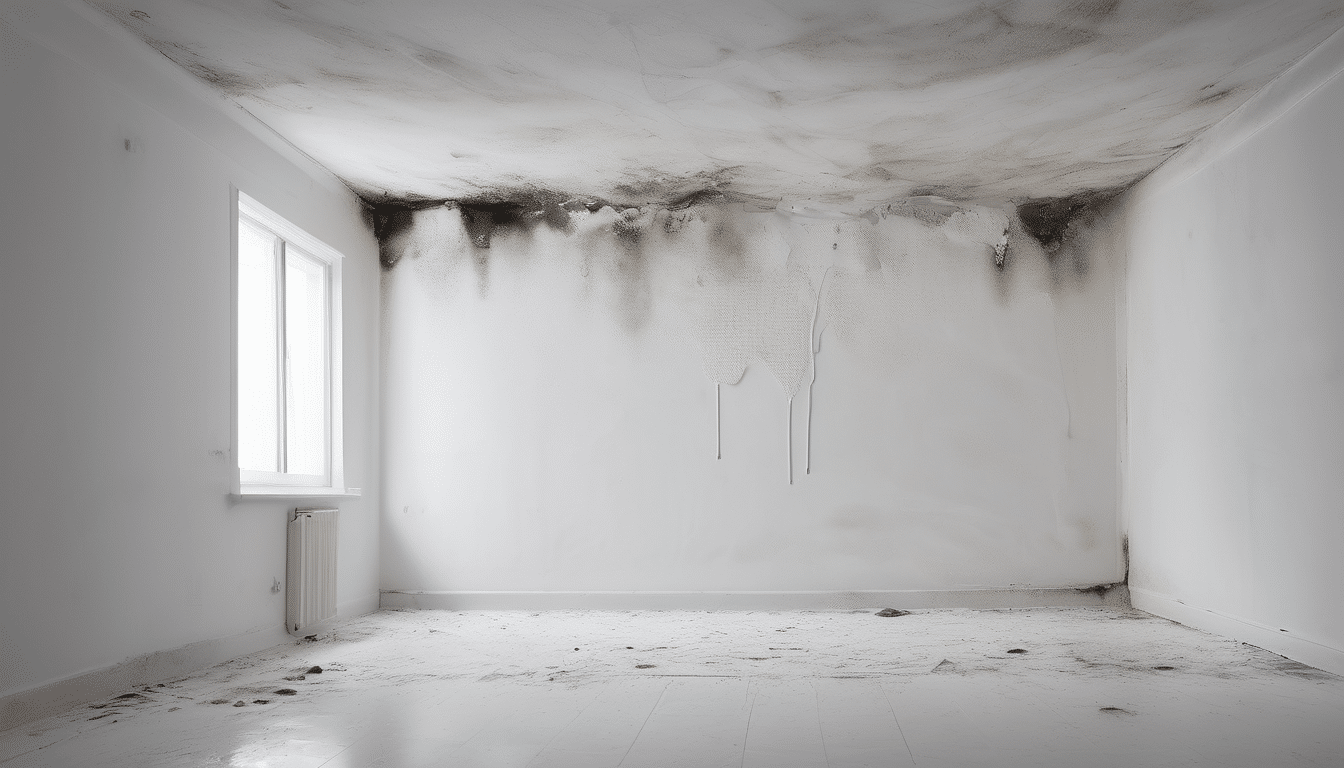
If you are a tenant in Dubai, Abu Dhabi, or anywhere across the UAE dealing with unchecked mold growth in your rental property, documentation is not optional — it is the foundation of any successful legal claim. Knowing precisely How to Document mold damage for a legal claim can be the difference between a successful dispute resolution and a dismissed complaint. Evidence gathered correctly, in the right sequence, with scientific verification, carries real weight in UAE legal forums.
Mold damage claims in the UAE typically involve the Rent Dispute Centre (RDC) in Dubai, the Abu Dhabi Rental Dispute Resolution Committee, or civil courts in other emirates. Each requires verifiable, well-organised evidence. A photograph alone rarely suffices. A professional inspection report backed by laboratory findings, however, presents a compelling picture of negligence and habitability failure. This relates directly to Document Mold Damage For A Legal Claim.
This guide walks you through the precise steps required to document mold damage effectively, from the moment you first observe a problem to the point of filing a formal legal complaint. Follow these steps in order — the sequence matters as much as the evidence itself.
Document Mold Damage For A Legal Claim – Why Documentation Matters in Mold Legal Claims
Understanding how to document mold damage for a legal claim begins with understanding what UAE adjudicators actually examine. Legal forums assess whether a landlord was aware of the problem, whether they failed to act within a reasonable timeframe, and whether the mold constituted a genuine breach of habitability obligations. Without a documented trail, these elements are difficult to prove.
Under UAE tenancy law, landlords are generally obligated to maintain rental properties in a condition fit for habitation. Persistent mold resulting from structural defects, failed waterproofing, or faulty HVAC systems falls within this obligation. However, proving this requires more than a complaint — it requires a chain of evidence that demonstrates awareness, inaction, and consequential harm. When considering Document Mold Damage For A Legal Claim, this becomes clear.
The quality of your documentation directly determines the strength of your claim. Vague photographs, undated communications, and no laboratory confirmation leave significant gaps that a landlord’s legal representative can exploit. Precision in this process is essential.
Document Mold Damage For A Legal Claim – Step 1 — Notify Your Landlord in Writing Immediately
The first and most critical action in the process of documenting mold damage for a legal claim is creating a formal written record of your notification. Verbal complaints carry no legal weight. A WhatsApp message, email, or formal letter sent through registered post creates a timestamped record of when the landlord was informed.
What Your Written Notice Should Include
- Date of observation (DD/MM/YYYY format)
- Location of mold within the property (room, surface, approximate area)
- Description of visible damage and any associated moisture or odour
- A request for inspection and remediation within a specified timeframe
- Reference to your tenancy contract and the property address
Send this notice via email so there is a time-stamped digital record. If you communicate via WhatsApp, take screenshots immediately. Keep all correspondence archived in one folder, sorted by date. This written trail is indispensable when documenting mold damage for a legal claim, as it establishes that the landlord had knowledge of the problem.
If the landlord fails to respond within a reasonable period — typically 15 to 30 days depending on severity — this non-response itself becomes evidence of negligence. The importance of Document Mold Damage For A Legal Claim is evident here.
Document Mold Damage For A Legal Claim – Step 2 — Capture Comprehensive Photographic Evidence
Photographs form the visual backbone of any mold damage claim. When learning how to document mold damage for a legal claim, understanding what to photograph — and how — is a skill in itself. Poor-quality images taken without context do little to support your case.
Best Practices for Mold Damage Photography
- Enable location and timestamp metadata on your smartphone camera settings before taking any photographs
- Photograph from multiple distances — wide shots establish context, close-up shots show severity
- Include a reference object such as a ruler, coin, or known item to indicate scale
- Capture adjacent damage — peeling paint, water staining, condensation on walls, bubbling surfaces
- Document every affected room separately with clear room identification in filenames
- Take video walkthroughs narrating what you see, where you are, and the date
Photograph the mold before any cleaning, removal, or repair attempts. Once a surface is disturbed, visual evidence is permanently compromised. This is one of the most common mistakes tenants make when attempting to document mold damage for a legal claim — they clean first and photograph later, inadvertently destroying evidence.
Step 3 — Commission a Professional Mold Inspection
Self-documentation has significant limitations. A professional mold inspection conducted by a qualified indoor environmental specialist provides findings that carry substantially more credibility in legal proceedings. Professional inspection reports are prepared by certified individuals whose qualifications can be verified, and whose methodologies follow recognised standards.
In Dubai and across the UAE, professional mold inspectors use thermal imaging cameras to detect moisture behind walls and ceilings, borescope cameras to investigate concealed cavities, and calibrated moisture metres to quantify the extent of saturation. These tools reveal what photographs cannot — the full systemic scope of the contamination. Understanding Document Mold Damage For A Legal Claim helps with this aspect.
What a Professional Inspection Report Should Contain
- Inspector’s credentials and certification details
- Property address and inspection date
- Detailed description of all affected areas with measurements (in square metres)
- Thermal imaging findings and moisture readings with data tables
- Probable root causes — whether structural, HVAC-related, or waterproofing failure
- Recommendations for remediation and corrective action
- Signed and dated declaration from the inspector
A comprehensive inspection report is arguably the single most powerful document when you need to know how to document mold damage for a legal claim. It transforms a subjective complaint into an objective, measurable finding by a qualified professional.
Step 4 — Obtain Laboratory-Confirmed Mold Testing Results
Photographic and visual evidence confirms presence. Laboratory testing confirms identity, concentration, and risk. For serious mold damage claims — particularly those involving health impacts or significant property damage — laboratory analysis elevates your documentation to a scientifically verifiable standard.
Air sampling using spore trap cassettes can quantify airborne mold spore concentrations inside your property and compare them against outdoor baseline levels. Surface sampling using tape lifts or swabs identifies the specific mold species present. When species such as Stachybotrys chartarum (commonly referred to as black mold) or high concentrations of Aspergillus or Penicillium are confirmed, the health risk dimension of the claim is strengthened considerably.
Laboratory reports should be issued by an accredited laboratory on official letterhead, with sample identification numbers, collection dates, analysis methods, and species-level findings clearly stated. These reports are among the most compelling pieces of evidence when documenting mold damage for a legal claim because they are objective, reproducible, and professionally produced. Document Mold Damage For A Legal Claim factors into this consideration.
In the UAE, professional mold testing services typically cost between AED 800 and AED 3,000 depending on the number of samples and the scope of analysis. This investment is minor compared to the remediation costs or rent disputes at stake.
Step 5 — Gather Medical Records Linking Health Impacts
If you or any household member has experienced health symptoms — respiratory problems, chronic coughing, skin irritation, allergic reactions, or worsening asthma — medical records documenting these symptoms become a critical element of your claim.
Visit a licensed physician and explicitly describe your home environment and the suspected mold exposure. Request that your symptoms be documented in relation to your living conditions. A medical professional who connects your symptoms to indoor mold exposure provides corroborating evidence of harm — which strengthens the legal basis of your claim significantly.
Keep records of all medical appointments, prescriptions, and treatment costs. These costs may form part of a compensation claim against your landlord, particularly if remediation was unreasonably delayed despite written notification. This relates directly to Document Mold Damage For A Legal Claim.
Step 6 — Document Property and Belongings Damage
Mold does not only damage building fabric — it damages personal property. Clothing, furniture, mattresses, books, and electronics stored in affected areas can all sustain mold damage. Documenting this forms an additional layer of your claim for compensation.
How to Record Personal Property Damage
- Photograph each damaged item clearly with date-stamped images
- List items in a written inventory with estimated replacement values in AED
- Retain receipts for any items you are forced to discard or replace
- Obtain written quotes for professional cleaning of salvageable items
This inventory of personal losses reinforces the financial dimension of your claim when documenting mold damage for a legal claim, and provides specific figures that can be presented during dispute resolution.
Step 7 — Organise Your Complete Evidence File
All evidence gathered must be compiled into a coherent, well-organised file that can be presented clearly to adjudicators, legal representatives, or mediators. Disorganised evidence — even if individually strong — loses impact when it cannot be followed logically.
Recommended Evidence File Structure
- Section A — Tenancy Documentation: Ejari certificate, tenancy contract, rental payment records
- Section B — Communication Records: All written notifications to landlord, responses received, WhatsApp screenshot archives, emails in chronological order
- Section C — Photographic Evidence: Organised by room and date, labelled clearly
- Section D — Professional Inspection Report: Full report with inspector credentials
- Section E — Laboratory Testing Results: All sample analysis reports
- Section F — Medical Records: Consultation notes, prescriptions, and any physician statements
- Section G — Property Damage Inventory: Written list with photographs and AED valuations
- Section H — Remediation Cost Estimates: Quotes from licensed mold remediation companies
Maintain both a physical copy (printed on A4, clearly tabbed) and a digital copy with organised folders. When you know how to document mold damage for a legal claim this thoroughly, presenting your case becomes a structured, confident process rather than a reactive one.
Common Mistakes That Weaken Your Mold Damage Claim
Even well-intentioned tenants make errors that undermine their ability to document mold damage for a legal claim successfully. Awareness of these pitfalls is part of the process.
- Cleaning mold before documenting it — destroys visual and biological evidence permanently
- Relying on verbal complaints only — leaves no traceable record of landlord notification
- Delaying documentation — mold spreads and conditions change; document immediately
- Missing metadata in photographs — undated images are easily challenged
- No laboratory confirmation — visual claims without scientific backing are easy to dispute
- Allowing unauthorised repairs — if the landlord sends workers to paint over mold without proper remediation, document this as a further inadequate response
Each of these mistakes creates a gap in your evidence chain. A well-prepared legal claim leaves no such gaps.
Conclusion
Learning how to document mold damage for a legal claim is a methodical, science-grounded process that requires action from the very first day of discovery. Every written notice, every date-stamped photograph, every laboratory report, and every medical record contributes to a body of evidence that tells a clear and verifiable story — of a property condition that was hazardous, a landlord who was informed, and harm that resulted from inaction.
In the UAE’s legal environment, particularly within Dubai’s Rent Dispute Centre, well-organised and professionally supported evidence carries significant weight. Tenants who invest the time and modest expense of professional inspection and laboratory testing are far better positioned than those who rely on photographs alone.
The core principle remains consistent throughout: document mold damage for a legal claim with the same rigour you would apply to any serious legal matter — because that is precisely what it is. If you are unsure where to begin, a qualified indoor environmental professional can guide you through the process and provide the expert documentation that your case requires.