
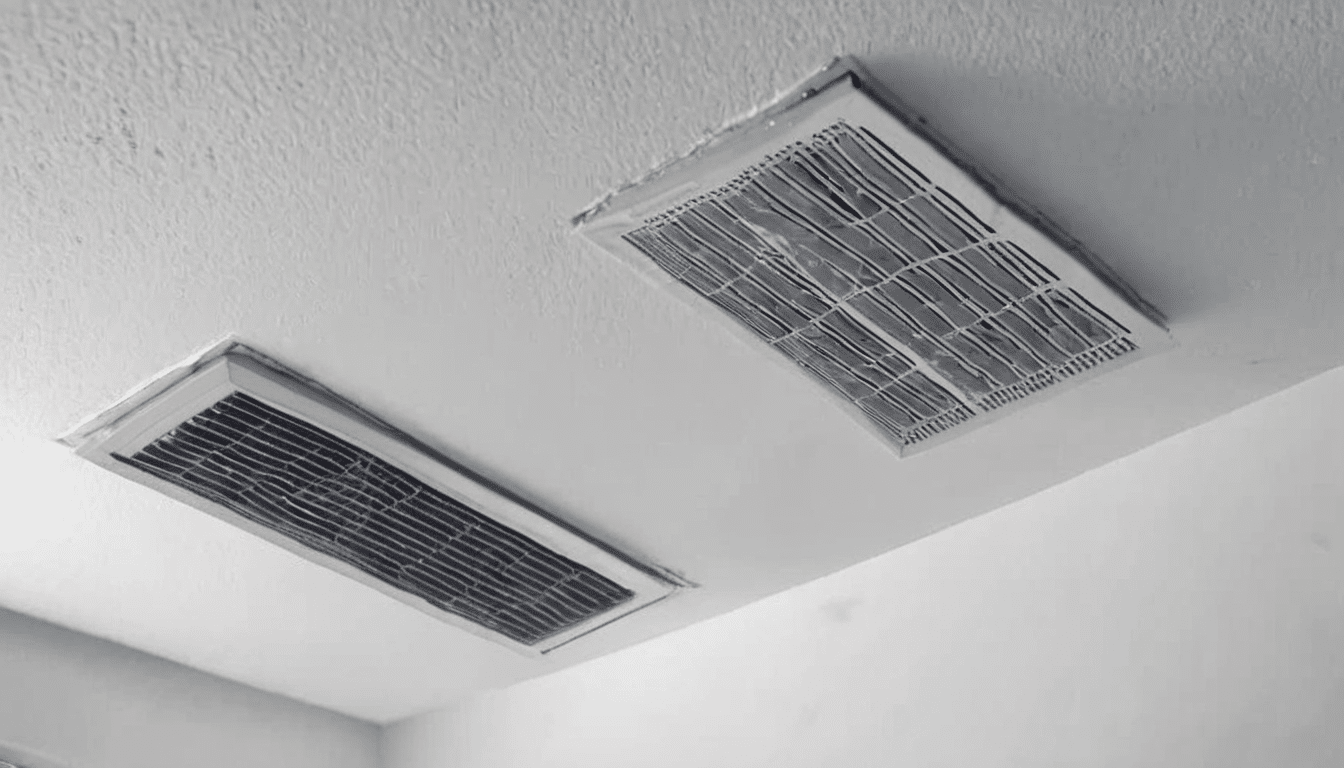
In Dubai’s climate, how regular AC duct cleaning in Dubai helps in mold removal is not a theoretical question — it is something building scientists observe in field investigations every week. When ambient temperatures exceed 40°C and indoor humidity is kept artificially low by running air conditioning continuously, condensation forms predictably inside ductwork. That moisture, combined with accumulated dust and organic debris, creates the precise conditions mold requires to colonise surfaces, release spores, and spread through the building’s own air distribution system.
This guide draws on more than 20 years of building diagnostics and indoor environmental science, including laboratory-confirmed casework from Dubai villas, high-rise apartments, and commercial facilities across the UAE. The science is consistent: duct systems that are not maintained on a defined schedule become vectors for mold dispersal — not just repositories for it. Understanding how regular AC duct cleaning in Dubai helps in mold removal means understanding the building as a system, not a collection of isolated rooms.
What follows is a complete reference — covering the biology of duct-linked mold, the physics that drive moisture accumulation in UAE climates, the remediation science behind professional duct cleaning, and the verification protocols that confirm results are real rather than cosmetic.
How Regular Ac Duct Cleaning In Dubai Helps In Mold Removal – Why Dubai AC Systems Create Mold Conditions
Dubai’s outdoor climate is not merely hot — it is hygrothermal. During summer months, outdoor relative humidity can reach 80–90% in coastal zones including Jumeirah, Dubai Marina, and JBR. The moment that warm, moisture-laden air contacts cold duct surfaces chilled by continuous air conditioning, condensation forms. This is not a maintenance failure. It is physics, and it happens in even well-maintained systems when design or insulation specifications are not matched to actual operating conditions.
According to field investigations conducted across Dubai residential and commercial properties, ductwork operating in high-humidity coastal zones without adequate insulation thickness shows measurable surface condensation within the first two hours of a cooling cycle. Over weeks and months, that condensation saturates duct liner materials — typically fibreglass or foam-backed board — creating a reservoir that never fully dries. This relates directly to How Regular Ac Duct Cleaning In Dubai Helps In Mold Removal.
The Role of Continuous Operation
UAE properties run their air conditioning systems for eight to twelve months of the year. This continuous operation means duct surfaces are almost never warm enough to evaporate accumulated moisture before additional condensation forms. The result is chronic dampness — one of the three conditions mold requires alongside nutrients and viable spores.
Nutrients in this context are the organic particles that accumulate inside every duct system: skin cells, textile fibres, construction dust, and food particulates transported by return air. Without regular physical removal of this organic material, the duct interior becomes a prepared growth medium. This is precisely the building science context that explains how regular AC duct cleaning in Dubai helps in mold removal at a systems level, not just a surface level.
Understanding How Regular AC Duct Cleaning in Dubai Helps in Mold Removal
The relationship between AC duct cleaning and mold removal is mechanistic. Mold does not grow in clean, dry duct systems. It grows where three variables converge: moisture, organic substrate, and viable spores. Regular professional cleaning addresses two of those three variables directly — substrate removal and spore load reduction — while simultaneously creating conditions that reduce moisture retention.
In Saniservice field investigations across Dubai villas and apartment buildings, properties with no documented duct cleaning history consistently show elevated airborne spore counts measured by spore trap air sampling. Aspergillus, Penicillium, and Cladosporium species are the most frequently identified genera in HVAC-linked contamination cases. These are not unusual outdoor species — they are ubiquitous — but their indoor amplification indicates an active growth source within the building envelope, most commonly the duct system itself. When considering How Regular Ac Duct Cleaning In Dubai Helps In Mold Removal, this becomes clear.
The Dispersal Mechanism
What makes duct-linked mold particularly significant from an indoor environmental science perspective is the dispersal mechanism. A mold colony growing on a bathroom wall affects that room. A mold colony growing inside a supply duct affects every room that duct serves — simultaneously. Every time the air handler activates, spores are dislodged and distributed throughout the living or working space.
This dispersal pattern explains why occupants in multi-room Dubai villas sometimes report symptoms — persistent nasal irritation, unexplained fatigue, sleep disruption — without any visible mold growth in their bedrooms. The source is not visible because it is inside the duct system. Understanding how regular AC duct cleaning in Dubai helps in mold removal starts with recognising this dispersal dynamic.
The Biology of Mold Inside Duct Systems
Mold is not a single organism — it is a diverse kingdom of fungi, each with different temperature tolerances, moisture requirements, and substrate preferences. In Dubai’s duct systems, the species composition reflects the specific conditions inside UAE HVAC infrastructure.
Based on laboratory analysis from Saniservice’s in-house microbiology facility, the most frequently isolated mold genera from UAE duct swab samples include Aspergillus niger, Aspergillus fumigatus, Cladosporium sphaerospermum, Penicillium citrinum, and Alternaria alternata. Each of these species produces spores small enough — typically 2–10 micrometres in diameter — to penetrate deep into the respiratory tract when inhaled in sufficient concentrations. The importance of How Regular Ac Duct Cleaning In Dubai Helps In Mold Removal is evident here.
Spore Counts and Concentration Thresholds
Indoor air sampling using Zefon Air-O-Cell cassettes, interpreted against AIHA and IAC2 reference ranges, consistently shows that Dubai properties with uncleaned duct systems for more than 24 months have indoor-to-outdoor spore count ratios exceeding 1:1 — the threshold that indicates indoor amplification rather than normal infiltration of outdoor spores.
In Dubai villas built before 2010, field data indicates that approximately 65% of properties inspected after a water intrusion event show active mold growth within the duct system within six months of the incident. This statistic reflects the combination of pre-existing organic accumulation and the moisture event that activates dormant spores already present on duct surfaces. Understanding How Regular Ac Duct Cleaning In Dubai Helps In Mold Removal helps with this aspect.
Mycotoxin Considerations
Certain mold species produce secondary metabolites known as mycotoxins. Aspergillus species — which are well-adapted to the warm, intermittently moist conditions inside UAE ductwork — are among the genera capable of mycotoxin production under stress conditions. As an IAC2-certified indoor air consultant, my position is consistent: the question is not whether mold is present but what species, at what concentration, and what the laboratory data confirms. Mycotoxin-aware remediation planning begins with species identification, not assumption.
How AC Duct Cleaning Interrupts Mold Dispersal in Dubai Buildings
Professional AC duct cleaning, when performed to NADCA standards, removes the accumulated organic substrate that sustains mold growth and physically disrupts established colonies before they can continue dispersing spores into occupied spaces. This is how regular AC duct cleaning in Dubai helps in mold removal at the mechanical level.
NADCA — the National Air Duct Cleaners Association — defines the source removal standard as the only acceptable method: all debris must be physically extracted from the duct interior, not displaced further into the system or simply treated with chemical agents that mask rather than remove contamination.
The Cleaning Process in Detail
A NADCA-compliant duct cleaning process in a Dubai residential property typically involves the following sequence. The air handling unit is isolated and the system is placed under negative pressure using a high-efficiency particulate air (HEPA) vacuum connected to a collection point. Technicians then use rotary brushes and compressed air tools to dislodge accumulated debris from supply and return ductwork, grilles, diffusers, air handlers, and coil compartments. How Regular Ac Duct Cleaning In Dubai Helps In Mold Removal factors into this consideration.
The negative pressure ensures that dislodged debris — including mold spores — travels toward the collection unit rather than into the occupied space. This containment principle is the same logic applied in professional mold remediation and is non-negotiable in any science-based duct cleaning service.
Coil Cleaning — The Most Critical Component
The evaporator coil is the single most mold-prone component in any AC system. It operates at temperatures below the dew point of the incoming air, which means condensation is a designed outcome. In Dubai’s climate, coil surfaces can accumulate visible mold growth within six to eight months of the previous cleaning if the surrounding duct liner is compromised or if drainage is inadequate. This relates directly to How Regular Ac Duct Cleaning In Dubai Helps In Mold Removal.
Laboratory swab samples from evaporator coils in Dubai commercial buildings frequently return spore counts in the tens of thousands of colony-forming units per 100 cm² — concentrations that make coil cleaning the highest-priority component in any mold removal programme linked to HVAC systems. This is a central reason why understanding how regular AC duct cleaning in Dubai helps in mold removal must include the coil, not just the visible ductwork.
Professional Duct Cleaning vs Surface Treatment for Mold Removal
A significant source of confusion in the Dubai market is the difference between genuine duct cleaning and surface fogging or chemical treatment marketed as mold remediation. These are not equivalent interventions, and understanding the distinction protects property owners from spending on services that do not address the contamination source. When considering How Regular Ac Duct Cleaning In Dubai Helps In Mold Removal, this becomes clear.
Chemical fogging — the application of biocidal agents through the duct system via the air handler — is sometimes offered as a standalone mold removal service. The fundamental problem with this approach is that chemical agents cannot remove organic debris. They may suppress surface mold temporarily, but the substrate remains. Within weeks to months, mold regrowth occurs from surviving spores embedded in the debris layer or in the duct liner material itself.
When Chemical Treatment Has a Role
This is not an argument against all chemical application — it is an argument for correct sequencing. In Saniservice’s protocol, antimicrobial treatment of duct surfaces is applied after physical source removal, not instead of it. Applied to a clean, debris-free duct interior, appropriate antimicrobial agents can extend the interval before re-colonisation. Applied over accumulated organic material, they are largely ineffective at reducing mold removal outcomes. The importance of How Regular Ac Duct Cleaning In Dubai Helps In Mold Removal is evident here.
Industry standards from IAC2 and NADCA are unambiguous on this point: source removal precedes treatment. Any service that reverses this sequence or omits the physical cleaning component should not be described as mold removal — it is cosmetic management.
How Regular Cleaning Frequency Affects Mold Removal Outcomes
The word “regular” in how regular AC duct cleaning in Dubai helps in mold removal carries specific meaning in a building science context. Frequency must be determined by building type, occupancy, HVAC design, and environmental exposure — not by a generic annual schedule applied uniformly across different property types.
Based on field investigation data from Dubai residential and commercial properties, the following frequency guidelines reflect evidence-based practice rather than marketing convention.
Frequency Guidelines by Property Type
For standard Dubai apartments in buildings constructed after 2010 with functioning vapour barriers and properly insulated ductwork, a professional duct cleaning cycle every 12–18 months is consistent with maintaining acceptable spore load levels between services. Air sampling at the 18-month mark in tested properties has shown spore count ratios beginning to exceed IAC2 indoor reference ranges at this point in the cycle. Understanding How Regular Ac Duct Cleaning In Dubai Helps In Mold Removal helps with this aspect.
For Dubai villas with larger duct networks, older construction dates, or known water intrusion history, a 12-month professional cleaning cycle is more appropriate. In properties where occupants include infants, immunocompromised individuals, or those with documented respiratory sensitivities, Saniservice recommends a clinical frequency assessment based on baseline air sampling rather than a time-based schedule alone.
Coastal Zones Require Adjusted Protocols
Properties in Dubai Marina, Palm Jumeirah, JBR, and other coastal locations face consistently higher ambient humidity than inland zones such as Dubai Silicon Oasis or Academic City. In these coastal properties, duct surfaces are subject to greater condensation loads, and the moisture-driven mold cycle operates faster. Field data from coastal Dubai villas shows measurable organic accumulation reaching NADCA source removal thresholds approximately 20% faster than comparable inland properties. This adjustment should be reflected in cleaning schedules. How Regular Ac Duct Cleaning In Dubai Helps In Mold Removal factors into this consideration.
Moisture Mapping and Root Cause Analysis in Dubai Duct Investigations
How regular AC duct cleaning in Dubai helps in mold removal is most fully understood when cleaning is preceded by moisture mapping — the systematic measurement of moisture content across building surfaces and within HVAC infrastructure using calibrated instruments including thermal imaging cameras, pin-type moisture metres, and hygrometers.
Thermal imaging reveals temperature differentials on duct surfaces, wall cavities adjacent to ductwork, and ceiling voids where supply ducts pass. In multiple Dubai villa investigations, thermal imaging has identified duct insulation failures invisible to direct inspection — areas where the vapour barrier has separated, allowing warm moist air to contact the cold duct exterior and condense within the wall cavity rather than inside the duct itself. This relates directly to How Regular Ac Duct Cleaning In Dubai Helps In Mold Removal.
Borescope Inspection for Hidden Mold
For duct sections that cannot be accessed through standard cleaning ports, borescope inspection — the insertion of a flexible camera probe — provides direct visual evidence of mold colonisation inside the duct interior. In Dubai properties where occupants report persistent musty odour despite previous duct cleaning, borescope investigation has identified mold growth behind duct liner material that was not addressed in the previous service because it was not visible from access points.
This is root-cause analysis applied to duct systems: the goal is not simply to clean what is visible but to identify and address the conditions that allowed mold to establish. Without this diagnostic layer, regular cleaning becomes reactive maintenance rather than a genuine mold removal strategy. When considering How Regular Ac Duct Cleaning In Dubai Helps In Mold Removal, this becomes clear.
Verification and Post-Cleaning Air Sampling for Mold Confirmation
Verification is what separates a science-based service from a commodity transaction. How regular AC duct cleaning in Dubai helps in mold removal can only be confirmed — not assumed — through post-cleaning air sampling that demonstrates a measurable reduction in airborne spore concentrations relative to pre-cleaning baseline measurements.
Post-remediation verification (PRV) following duct cleaning uses the same air sampling methodology as the baseline assessment: spore trap cassettes collected from representative rooms, analysed by an accredited laboratory, and interpreted against IAC2 clearance criteria. In Saniservice field cases, properties that passed PRV following professional duct cleaning showed average indoor spore count reductions of 70–85% compared to pre-cleaning samples — a measurable, documented improvement. The importance of How Regular Ac Duct Cleaning In Dubai Helps In Mold Removal is evident here.
What Clearance Confirmation Means for Dubai Property Owners
For Dubai homeowners, clearance confirmation carries practical significance beyond indoor wellbeing. In lease disputes, property handover negotiations, and DHA (Dubai Health Authority) assessments, laboratory-confirmed mold clearance documentation provides objective evidence of the indoor environmental condition of the property. This documentation is increasingly requested by tenants, real estate agents, and facility managers across Dubai and Abu Dhabi.
Without verification sampling, a property owner cannot demonstrate that the duct cleaning service achieved its intended mold removal outcome. The service has occurred; whether it was effective is unknown. Verification converts an unknown into a measured, documented result. Understanding How Regular Ac Duct Cleaning In Dubai Helps In Mold Removal helps with this aspect.
How Regular AC Duct Cleaning in Dubai Helps in Mold Removal and Property Protection
Beyond occupant wellbeing, how regular AC duct cleaning in Dubai helps in mold removal has direct implications for material preservation and property value. Mold contamination within a duct system does not remain contained to that system. Spore deposition on gypsum board, soft furnishings, ceiling tiles, and joinery creates secondary growth sites that compound remediation scope and cost over time.
In Dubai villa investigations where duct cleaning had not been performed for 36 months or longer, Saniservice field teams identified secondary mold growth on ceiling gypsum in rooms directly beneath supply diffusers — a predictable outcome when high spore concentrations are continuously deposited on surfaces that accumulate condensation from cooled air exiting those diffusers. How Regular Ac Duct Cleaning In Dubai Helps In Mold Removal factors into this consideration.
Cost of Inaction vs Investment in Prevention
Addressing mold removal at the duct level, before secondary colonisation establishes on building materials, represents a substantially smaller remediation scope than addressing both duct contamination and material contamination simultaneously. Property managers and building owners across Dubai who implement regular professional duct cleaning as a documented maintenance schedule consistently encounter fewer escalated mold remediation cases than those managing systems reactively.
The investment in regular duct cleaning — when viewed as a mold prevention and early removal strategy — is structurally more efficient than the alternative: full-scope mold remediation including material replacement, extended containment, and occupant relocation. This relates directly to How Regular Ac Duct Cleaning In Dubai Helps In Mold Removal.
Expert Recommendations for Dubai Homeowners and Property Managers
Based on more than a decade of indoor environmental investigations across Dubai, Sharjah, Abu Dhabi, and Ajman, the following recommendations reflect what building science and laboratory data consistently support for mold prevention and removal through HVAC management.
- Commission baseline air sampling before your first professional duct cleaning. Without a pre-cleaning measurement, post-cleaning verification has no reference point. Baseline sampling takes approximately 2 hours in a standard Dubai villa and provides the data that all subsequent cleaning decisions should reference.
- Require NADCA-standard documentation from any duct cleaning provider. Source removal — not fogging, not spraying — is the only method that addresses mold removal at the substrate level. Ask for the negative pressure containment protocol before booking any service.
- Include evaporator coil cleaning in every service cycle. The coil is not optional. In Dubai’s climate, it is the highest-risk component in the HVAC system and must be included in any mold-focused duct cleaning programme.
- Adjust your cleaning frequency to your property’s actual exposure profile. Coastal zone, older construction, known water intrusion history, and sensitive occupants all push the appropriate frequency toward 12 months rather than 18 or 24.
- Request post-cleaning air sampling as a standard deliverable. Clearance confirmation is not an add-on — it is the proof that the service achieved its mold removal objective. Saniservice provides laboratory-confirmed results through its own in-house microbiology facility, ensuring data integrity from sampling through reporting.
- Address moisture sources before scheduling cleaning. If there is an active water leak, condensation drip from an AC unit, or suspected duct insulation failure, these must be corrected before cleaning. Cleaning a system with an active moisture source produces temporary results — mold removal without root-cause correction is simply a scheduled re-contamination.
- Maintain indoor relative humidity between 50–60%. This range is achievable in Dubai with properly functioning HVAC and is the threshold below which most indoor mold species cannot sustain active growth. Hygrometer monitoring in occupied rooms provides ongoing confirmation that the system is performing within the target range.
Frequently Asked Questions
How does regular AC duct cleaning in Dubai help in mold removal specifically?
Regular AC duct cleaning removes the organic debris — dust, fibres, skin cells — that mold uses as a growth substrate inside ductwork. Without this material, mold cannot establish or sustain colonies. Cleaning also reduces the spore load circulating through the building’s air distribution system, directly lowering the concentration of airborne mold spores in occupied rooms. This is how regular AC duct cleaning in Dubai helps in mold removal at the building systems level.
How often should Dubai homeowners have their AC ducts cleaned for mold prevention?
In standard Dubai apartments, a professional duct cleaning every 12–18 months is consistent with maintaining acceptable indoor spore levels. Properties in coastal zones such as Dubai Marina or Palm Jumeirah, older villas, or homes with a water intrusion history should target a 12-month cycle. Properties with sensitive occupants may benefit from frequency decisions based on air sampling data rather than fixed time intervals.
What is the difference between professional duct cleaning and mold remediation?
Professional duct cleaning removes accumulated organic debris and surface mold from within the HVAC system, reducing spore dispersal and eliminating the substrate that sustains growth. Full mold remediation addresses mold colonisation on building materials — gypsum, insulation, wood — beyond the duct system. Regular duct cleaning is a preventive and early-removal strategy; remediation is a corrective response when mold has established in building materials. Both may be required in advanced contamination cases. When considering How Regular Ac Duct Cleaning In Dubai Helps In Mold Removal, this becomes clear.
Can I see mold in my AC ducts, or does it require professional inspection?
Most mold growth inside duct systems is not visible without professional inspection tools. Borescope cameras inserted into duct access points, combined with thermal imaging of surrounding building surfaces, are required to detect mold in locations that are inaccessible to direct visual inspection. Odour — a persistent musty or earthy smell when the AC is running — is often the first occupant-reported indicator of duct-linked mold, but odour alone does not confirm species, concentration, or extent.
Does AC duct cleaning require the property to be vacated in Dubai?
Professional duct cleaning performed under negative pressure containment does not typically require full property vacation, though Saniservice recommends that occupants — particularly children and those with respiratory sensitivities — remain out of the property during the cleaning process and for a minimum of two hours afterwards. When duct cleaning is combined with active mold remediation of building materials, extended vacation may be required depending on scope and containment design. The importance of How Regular Ac Duct Cleaning In Dubai Helps In Mold Removal is evident here.
Is air sampling required after AC duct cleaning to confirm mold removal?
Post-cleaning air sampling is not legally mandated in Dubai for residential properties but is strongly recommended as the only objective way to confirm that mold removal objectives have been achieved. Without post-cleaning spore count data compared to a pre-cleaning baseline, the effectiveness of the service remains unverified. For commercial properties subject to Dubai Municipality or DHA indoor air quality requirements, post-cleaning documentation is increasingly a compliance expectation.
What mold species are most commonly found in Dubai AC duct systems?
Laboratory analysis of Dubai duct samples most frequently identifies Aspergillus niger, Aspergillus fumigatus, Cladosporium sphaerospermum, Penicillium citrinum, and Alternaria alternata. These genera thrive in the warm, intermittently moist conditions typical of UAE ductwork. Species identification matters for remediation planning because different species have different substrate preferences, growth rates, and — in the case of certain Aspergillus species — mycotoxin production potential under stress conditions. Understanding How Regular Ac Duct Cleaning In Dubai Helps In Mold Removal helps with this aspect.
There is a measurable difference between a duct system that has been physically cleaned, verified by air sampling, and documented with laboratory results — and one that has simply been treated with a chemical agent and assumed to be clear. How regular AC duct cleaning in Dubai helps in mold removal is ultimately a question of evidence: did the intervention reduce the mold load to acceptable levels, and is there data to prove it? That question deserves a precise, documented answer — not an assumption. If you are ready to measure rather than assume, the starting point is a baseline assessment of what your air quality actually looks like.