
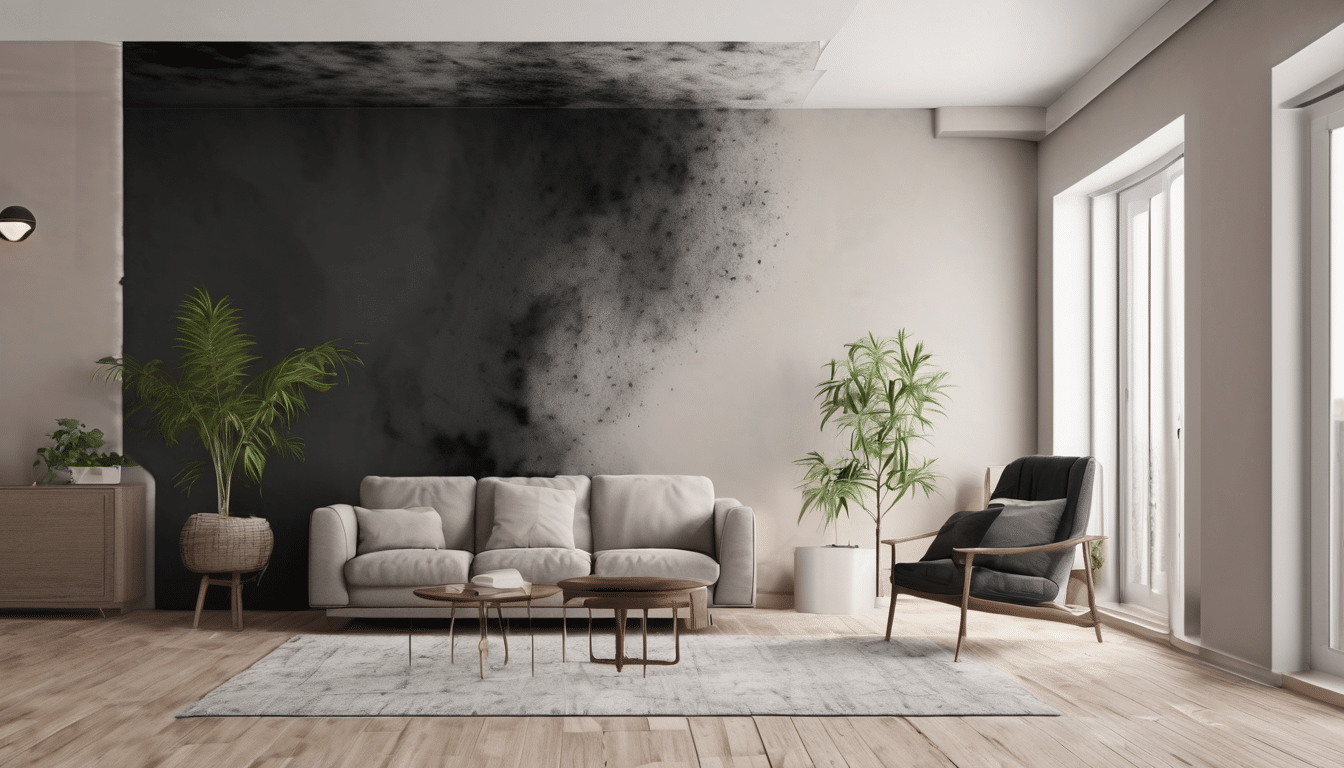
Black Mould Health risks for UAE families explained clearly — that is the intent of this article. In Dubai, Abu Dhabi, Sharjah, and across the Emirates, indoor mould is not a seasonal nuisance. It is a year-round consequence of high ambient humidity, condensation-prone buildings, and HVAC systems that are often under-maintained. When Stachybotrys chartarum or similar dark-pigmented species colonise a surface, the biological response inside your home changes in ways that are measurable, documentable, and clinically relevant.
As an IAC2 Certified Indoor Air Consultant with more than 20 years of cross-disciplinary experience, I have investigated hundreds of UAE properties where occupants reported symptoms long before any visible growth was identified. The pattern is consistent: the health signal appears first, the mould is confirmed later. Understanding why that happens — and what specific risks are involved — is what black mould health risks for UAE families explained must address in full.
This article covers 8 documented health risks associated with black mould exposure in UAE residential environments. Each point is grounded in building science, mycology, and the clinical literature that guides professional indoor environmental assessment.
Black Mould Health Risks for UAE Families – Why Black Mould in UAE Homes Demands Serious Attention
The UAE climate creates conditions that accelerate mould growth. Outdoor relative humidity regularly exceeds 80% during summer months, and indoor surfaces — particularly those adjacent to cold supply air from AC units — become condensation points. When building envelope failures, water leaks, or ventilation gaps are added to this picture, Stachybotrys and related genera find substrate and moisture within days, not weeks.
Black mould health risks for UAE families explained in this context must account for the fact that UAE residents spend a large proportion of their time indoors. In a climate where outdoor temperatures reach 45°C or above during summer, windows remain closed and mechanical ventilation systems recirculate air continuously. This means that whatever biological load exists inside the building — spores, fragments, volatile organic compounds, mycotoxins — is inhaled repeatedly, day after day.
The risks below are not theoretical. They are the clinical outcomes most consistently linked to indoor mould exposure by occupational health bodies, respiratory medicine associations, and indoor environmental standards including those referenced by the EPA and WHO.
8 Black Mould Health Risks for UAE Families Explained
1. Respiratory Irritation and Airway Inflammation
The most immediately observable consequence of mould spore inhalation is irritation of the upper and lower respiratory tract. Spores and hyphal fragments, when inhaled, trigger an inflammatory response in the bronchial lining. For occupants without pre-existing conditions, this typically presents as persistent coughing, throat irritation, nasal congestion, and a sensation of tightness in the chest.
In UAE families where windows remain closed for extended periods, the spore concentration in recirculated air can accumulate to levels that sustain continuous low-grade irritation. Air sampling conducted during field investigations frequently reveals spore counts that would be considered acceptable in outdoor air but are significantly elevated relative to control samples taken outside the affected building. This relates directly to Black Mould Health Risks for UAE Families.
2. Asthma Exacerbation in Existing Sufferers
Black mould health risks for UAE families explained must specifically address asthma. The WHO and international respiratory medicine bodies have documented a well-established causal relationship between indoor mould exposure and worsening asthma control. For individuals with diagnosed asthma, even moderate mould spore concentrations can trigger bronchospasm, increased inhaler dependency, and reduced peak flow measurements.
UAE families with asthmatic members — particularly children — should treat any confirmed or suspected mould presence as a clinical priority, not a maintenance issue. A professional investigation is warranted before symptom management is escalated through medication alone.
3. Allergic Sensitisation
Repeated mould spore exposure can sensitise the immune system over time, even in individuals who show no initial reaction. This process — known as allergic sensitisation — means that occupants who tolerate early mould presence may develop IgE-mediated allergic responses after months of cumulative exposure. Skin testing and specific IgE blood panels can confirm sensitisation to Stachybotrys, Aspergillus, Cladosporium, and other genera commonly identified in UAE building investigations.
The practical consequence for UAE families is that a mould problem that appears tolerable today may be silently creating long-term immune sensitivity in household members. Black mould health risks for UAE families explained in full must include this delayed-onset dimension.
4. Mycotoxin Exposure and Systemic Effects
Stachybotrys chartarum — the species most commonly associated with the term “black mould” — produces trichothecene mycotoxins under certain growth conditions. Mycotoxins are secondary metabolites that can affect multiple organ systems. Documented effects in the scientific literature include neurological symptoms, immune suppression, and fatigue states that do not resolve without addressing the source exposure.
It is important to be precise here: not all dark-coloured moulds are Stachybotrys, and not all Stachybotrys colonies produce mycotoxins at clinically significant levels in every building. Laboratory species identification — including surface sampling and mycotoxin-specific testing — is required to determine whether mycotoxin exposure is a factor in a given property. Assumptions in either direction are not appropriate.
5. Fungal Rhinosinusitis
Chronic sinusitis that does not respond to standard antibiotic treatment is a frequently overlooked dimension of black mould health risks for UAE families explained in clinical terms. Fungal rhinosinusitis occurs when mould species colonise the sinus cavities, creating persistent inflammation, polyp formation, and recurrent infection cycles. This condition is often misdiagnosed as bacterial sinusitis and treated repeatedly with antibiotics that have no effect on the fungal component.
In UAE families where mould presence has been longstanding — particularly in bedrooms and sleeping areas — unexplained chronic sinusitis should prompt both an ENT evaluation and a professional indoor environmental assessment conducted in parallel.
6. Skin and Eye Irritation
Direct contact with mould-colonised surfaces and indirect exposure via airborne fragments can produce dermal and ocular responses. Skin irritation, redness, and itching — particularly in children who spend time on floors near affected walls or under affected ceilings — are commonly reported in field investigations. Eye irritation, watering, and redness are similarly reported by occupants in rooms where mould is present but not yet visible.
These symptoms are frequently attributed to other causes — dust, air conditioning, screen time — without consideration of the indoor biological environment. Black mould health risks for UAE families explained rigorously must include these non-respiratory presentations, which are often the earliest signals of a problem developing behind surfaces.
7. Neurological and Cognitive Symptoms
The link between indoor mould exposure and neurological symptoms is an area of active clinical research. Peer-reviewed literature has documented associations between prolonged mould exposure — particularly to mycotoxin-producing species — and symptoms including brain fog, concentration difficulty, memory lapses, mood disturbance, and persistent fatigue. These presentations are categorised under the broader framework of Chronic Inflammatory Response Syndrome (CIRS) in integrative and functional medicine practice.
For UAE families where occupants report cognitive or mood changes alongside other environmental complaints, a comprehensive indoor environmental assessment — including air sampling, surface sampling, and mycotoxin analysis where indicated — provides the data needed to determine whether the building environment is a contributing factor.
8. Heightened Risk for Vulnerable Occupants
Black mould health risks for UAE families explained must distinguish between general occupant risk and the significantly elevated risk faced by vulnerable groups. Infants and young children, elderly individuals, pregnant women, and anyone with compromised immune function — whether due to illness, medication, or underlying conditions — face disproportionate risk from the same mould concentrations that a healthy adult might tolerate symptomatically.
In UAE households where vulnerable occupants are present, the threshold for professional assessment should be lower, and the remediation standard should be higher. Post-remediation verification through clearance air sampling is not optional in these settings — it is the only way to confirm that the indoor environment has been returned to a safe biological baseline. When considering Black Mould Health Risks for UAE Families, this becomes clear.
How UAE Building Conditions Amplify Black Mould Health Risks
Black mould health risks for UAE families explained in isolation from building physics is incomplete. The UAE presents a specific combination of factors that intensifies exposure potential. Concrete construction retains moisture. Thermal bridging at walls and window frames creates condensation surfaces. HVAC systems that are not regularly serviced accumulate biological growth within the ductwork and distribute spores throughout the property with every cooling cycle.
Hidden mould — growth behind gypsum board partitions, under floor screeds, above suspended ceilings — is frequently identified during borescope investigations and moisture mapping surveys in Dubai villas and apartment buildings. Occupants in these properties are exposed to airborne mould fragments without any visible indication that a problem exists. The health effects precede the visual evidence by months or years in some cases.
What a Professional Investigation Covers for UAE Families
A professional mould investigation aligned with IAC2 and IICRC standards is not a visual inspection with a spray bottle. It involves moisture mapping using calibrated instruments, thermal imaging to identify condensation pathways, air sampling with laboratory analysis of spore types and concentrations, and surface sampling where growth is suspected or confirmed.
The Saniservice Indoor Sciences division operates the UAE’s only in-house microbiology laboratory within an indoor environmental services company. This means that samples collected during field investigations are analysed by the same team that designs the remediation protocol — a continuity of data interpretation that directly improves remediation accuracy and outcome verification.
For UAE families concerned about black mould health risks, the investigation is where understanding begins. The remediation scope — and the post-remediation clearance standard — is determined by what the data shows, not by assumption.
Expert Takeaways for UAE Homeowners
- Do not wait for visible growth. Health symptoms — particularly respiratory, neurological, or persistent — may precede visible mould by weeks or months in UAE buildings.
- Species identification matters. Not all dark-coloured growth carries the same risk profile. Laboratory confirmation determines the appropriate response.
- HVAC systems are a vector. If mould is present in one room, the air distribution system may be spreading spores throughout the property. Duct assessment is part of a complete investigation.
- Vulnerable occupants require a higher clearance standard. Post-remediation air sampling provides the only verifiable confirmation that the environment is safe to re-occupy.
- Moisture control is the long-term solution. Remediation without addressing the source of moisture is a temporary measure. The root cause must be identified and corrected.
Black Mould Health Risks for UAE Families Explained — Conclusion
Black mould health risks for UAE families explained across these eight dimensions reflect a consistent scientific and clinical picture: indoor mould is a building science problem with biological consequences. It is not a cosmetic issue, it is not self-resolving, and it is not adequately addressed by surface cleaning alone.
In the UAE, where building design, climate, and occupancy patterns create conditions that favour mould development, the informed response is always evidence-based. Measure the environment. Identify the species. Map the moisture. Verify the remediation. Black mould health risks for UAE families explained through data are risks that can be understood, quantified, and systematically addressed — which is the only standard that protects the indoor wellbeing of the people living in these spaces.
If your UAE property shows any of the signs discussed above, a professional assessment by a certified indoor environmental consultant is the appropriate first step. Contact the 800Molds team for a property-specific evaluation — scope, methodology, and clearance standards are determined by what the investigation finds, not by a generic package.
Frequently Asked Questions
What are the most common black mould health risks for UAE families?
The most frequently documented effects include respiratory irritation, asthma exacerbation, allergic sensitisation, and sinus inflammation. In cases involving mycotoxin-producing species such as Stachybotrys chartarum, neurological symptoms and systemic fatigue are also reported. Black mould health risks for UAE families are compounded by the amount of time residents spend indoors in air-conditioned environments throughout the year.
How do I know if mould in my Dubai home is making my family unwell?
Symptoms that worsen indoors and improve when occupants are away from the property are a consistent clinical indicator. Persistent coughing, unexplained fatigue, sinus congestion, and skin or eye irritation — particularly in multiple household members — should prompt a professional indoor environmental assessment. Air sampling and surface sampling provide laboratory-confirmed data to support or exclude mould as a contributing factor.
Is black mould more dangerous than other mould types in UAE homes?
The risk profile depends on species identification, concentration, and occupant vulnerability — not colour alone. Stachybotrys chartarum carries a higher risk profile due to potential mycotoxin production, but other genera including Aspergillus and Chaetomium also carry documented health significance. Laboratory identification of the specific species present is required before risk can be accurately characterised.
Can black mould hidden behind walls still affect health in Dubai apartments?
Yes. Hidden mould behind gypsum board partitions, above suspended ceilings, and within HVAC ductwork releases spores and volatile organic compounds into the indoor air without any visible surface indication. Borescope inspection, moisture mapping, and air sampling are the tools used to identify hidden mould growth in Dubai apartments and villas where occupants report symptoms without visible evidence.
How quickly should UAE families act if black mould is suspected?
An assessment should be arranged promptly, particularly where infants, elderly occupants, pregnant women, or immunocompromised individuals are present. Delay extends cumulative exposure, which is relevant to both allergic sensitisation and mycotoxin-related effects. A professional inspection determines the scope and urgency of any required remediation — early investigation consistently produces better outcomes and lower remediation complexity.
Does the UAE have clearance certificate requirements after black mould remediation?
DHA and relevant UAE health authorities have frameworks for indoor environmental compliance, and post-remediation clearance documentation is increasingly required for properties in regulated sectors. For residential UAE families, post-remediation clearance air sampling conducted by an independent laboratory provides verifiable confirmation that the indoor biological environment has returned to an acceptable baseline following professional remediation. The importance of Black Mould Health Risks for UAE Families is evident here.
What should I do first if I find black mould in my Sharjah or Abu Dhabi home?
Do not disturb the growth — physical disturbance releases spore concentrations significantly higher than undisturbed colonies. Arrange a professional inspection that includes moisture source identification, species sampling, and air quality assessment. In Sharjah, Abu Dhabi, Ajman, and Ras Al Khaimah, as in Dubai, the remediation protocol should be scoped from investigation data, not from a visual estimate alone. Understanding Black Mould Health Risks for UAE Families is key to success in this area.