
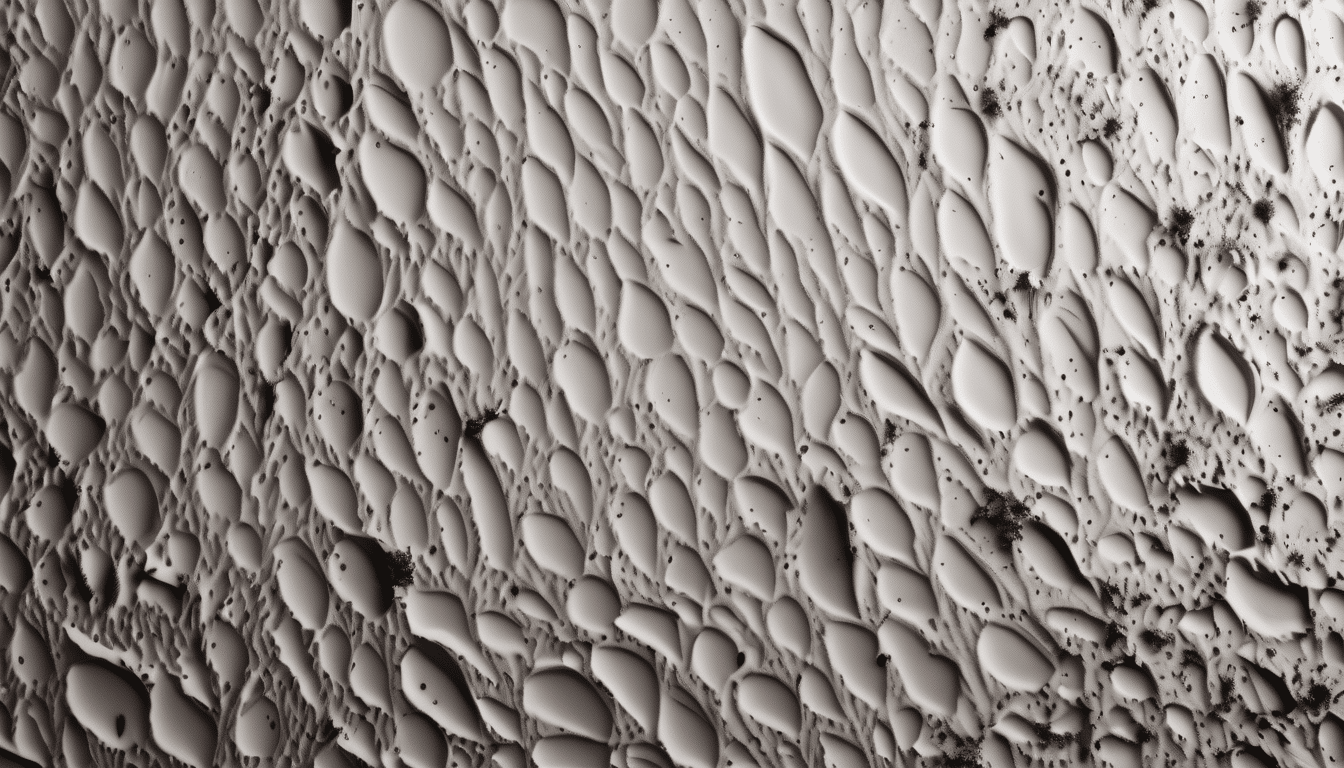
Knowing how to identify black mould vs other mould types at home is one of the most practically useful skills a Dubai homeowner can develop — and one of the most commonly misunderstood. In the UAE‘s climate, where indoor humidity regularly exceeds 70% during summer months and condensation forms inside walls, ceilings, and HVAC systems with predictable frequency, mould growth is not an anomaly. It is a building physics outcome. The real question is never simply “is this mould?” The more useful question is: “what type, at what concentration, and what does it mean for the people living here?”
This guide walks through a structured, step-by-step identification process — moving from visual assessment to sensory cues to laboratory confirmation. It is designed for homeowners who want to understand what they are looking at before making remediation decisions, and for anyone who has been told they have “black mould” without a single lab result to confirm it. This relates directly to Identify Black Mould vs Other Mould Types at Home.
As an IAC2 Certified Indoor Air Consultant with over 20 years of field investigation experience across Dubai and the broader UAE, I have assessed hundreds of properties where the initial assumption — “it’s black mould” — turned out to be partially or entirely wrong. Correct identification changes everything: the remediation approach, the health risk assessment, and the scope of work required.
Identify Black Mould vs Other Mould Types at Home – Why Correct Mould Identification Matters in Dubai Homes
Dubai’s built environment creates specific conditions that favour mould growth across a wide range of species. Thermal bridging in concrete structures, condensation on cold water pipes, HVAC systems drawing humid outdoor air indoors, and rapid temperature cycling between 45°C external heat and 20°C air-conditioned interiors — these are not edge cases. They are the operating conditions of most residential buildings in the UAE. When considering Identify Black Mould vs Other Mould Types at Home, this becomes clear.
Different mould species thrive under different conditions and present different risk profiles. Knowing How to Identify black mould vs other mould types at home helps homeowners avoid two equally damaging errors: panicking about a low-risk species, or dismissing a genuinely harmful one. Both errors lead to poor decisions.
The term “black mould” in popular usage almost always refers to Stachybotrys chartarum — a slow-growing, moisture-dependent species associated with mycotoxin production. However, mould appears black, dark green, or charcoal-coloured across dozens of other species that carry very different risk profiles. Visual colour alone is not a diagnostic tool. It is a starting point.
What You Will Need Before You Begin
Before attempting any visual or sensory assessment, gather the following:
- A torch or high-lumen inspection lamp
- Disposable nitrile gloves
- An N95 or FFP2 respirator mask
- A damp cloth or disposable wipes (for gently cleaning surface deposits to inspect texture)
- A moisture metre (available at most hardware suppliers in Dubai)
- A camera or smartphone for documentation
- A notepad for recording observations by room and location
Do not disturb large areas of suspected mould growth without professional containment in place. Agitation releases spores into the air, which can spread contamination to previously clean areas of the property.
How to Identify Black Mould vs Other Mould Types at Home — Step by Step
Step 1 — Locate All Visible Growth Systematically
Do not assess mould in isolation. Walk each room in a structured pattern: ceiling perimeter, wall junctions, window surrounds, skirting boards, behind furniture, inside wardrobes, and under sinks. In Dubai homes, pay particular attention to external-facing walls in bedrooms, the areas around split AC units, and bathroom ceilings where steam accumulates without adequate exhaust ventilation.
Photograph every patch. Record the location, approximate size, and height from floor level. This documentation becomes essential if professional remediation or a DHA clearance certificate is later required. The importance of Identify Black Mould vs Other Mould Types at Home is evident here.
Step 2 — Assess Colour and Surface Texture
This is the most misunderstood step in how to identify black mould vs other mould types at home. Use your torch to observe colour under direct light, then at an angle.
- True black or dark olive-black, slimy or gelatinous surface: Consistent with Stachybotrys chartarum. This species grows on cellulose-rich materials (drywall paper, wood, ceiling tiles) that have been continuously wet for at least 10–14 days. It is not fuzzy. Its texture is characteristically wet and compacted.
- Black or dark grey, powdery or granular texture: More consistent with Cladosporium or Alternaria — both common in UAE interiors and far less mycotoxin-associated than Stachybotrys.
- Green to blue-green, velvety texture: Likely Aspergillus or Penicillium. Both genera are extremely common in Dubai indoor environments, particularly in HVAC systems and on damp building materials. Certain Aspergillus species carry health significance, particularly for immunocompromised individuals.
- White, cottony or powdery growth: Often early-stage growth of several species, or efflorescence (salt deposits from moisture migrating through masonry — not mould at all).
- Pink or orange patches in bathrooms: Typically Serratia marcescens, a bacterium rather than a mould, common in wet surfaces with biofilm accumulation.
Step 3 — Check the Substrate the Mould Is Growing On
The material underneath the mould provides important diagnostic information. Stachybotrys chartarum almost exclusively colonises materials with high cellulose content — paper-faced gypsum board (standard in UAE villa construction), wood framing, and ceiling tiles. If the growth is on a painted concrete or tile surface, it is statistically unlikely to be Stachybotrys, regardless of colour.
Press gently on the surrounding wall surface with a gloved hand. Soft, spongy, or hollow-sounding drywall indicates prolonged moisture saturation — the exact condition required for Stachybotrys colonisation. A firm surface does not rule out mould, but it makes the most toxigenic species less probable. Understanding Identify Black Mould vs Other Mould Types at Home helps with this aspect.
Step 4 — Use a Moisture Metre to Quantify the Water Activity
This step separates informed assessment from guesswork. A professional-grade pin or pinless moisture metre measures moisture content within the building material. Readings above 20% in gypsum board or wood indicate conditions that actively support mould growth. Readings above 28–30% suggest saturation levels associated with accelerated colonisation.
Map readings across the affected wall or ceiling. A consistent band of elevated moisture readings that corresponds to the visible growth boundary confirms active moisture intrusion — and points toward a source that must be identified before any remediation proceeds. Mould identification without moisture source identification is incomplete assessment.
Step 5 — Assess the Odour
Mould produces volatile organic compounds (VOCs) as metabolic by-products. These compounds produce the characteristic musty, earthy, or damp odour associated with mould-affected spaces. Stachybotrys chartarum tends to produce a particularly pungent, heavy, damp-earth odour. Aspergillus and Penicillium species often produce a softer, more generalised mustiness. Identify Black Mould vs Other Mould Types at Home factors into this consideration.
If you detect a persistent musty smell in a room with no visible growth, this is a significant indicator of hidden mould — commonly found behind Dubai villa walls where plumbing leaks or condensation have saturated internal materials without breaking through the surface. In this scenario, visual identification alone is insufficient and investigation must proceed further.
Step 6 — Document Occupant Symptoms and Their Timing
Understanding how to identify black mould vs other mould types at home is not only a visual exercise — it includes correlating the biological signature with occupant health patterns. Stachybotrys exposure is associated with persistent respiratory symptoms, headaches, and fatigue that improve when occupants leave the property. However, these symptoms overlap significantly with other mould genera and with poor indoor air quality generally.
Note whether symptoms are worse in specific rooms, during specific seasons, or after extended time at home. This information supports both professional assessment and, if required, occupational health or medical consultation. This relates directly to Identify Black Mould vs Other Mould Types at Home.
How to Identify Black Mould vs Other Mould Types at Home Using Laboratory Testing
Visual and sensory assessment narrows probability — it does not confirm species identity. The only reliable method for definitive identification is laboratory analysis. In Dubai, this typically involves one or more of the following sampling methods:
- Air sampling (spore trap): Captures airborne spores over a timed period. Results express spore counts per cubic metre by genus. Elevated Stachybotrys counts in indoor air relative to outdoor baseline strongly indicate active colonisation.
- Tape lift or swab surface sampling: A physical sample is collected from the affected surface and submitted to an accredited microbiology laboratory for microscopy and culture. This identifies species present on the sampled material.
- ERMI (Environmental Relative Mouldiness Index) analysis: A dust-based DNA test that profiles the complete mould community within a property. Particularly useful for identifying hidden Stachybotrys colonisation in the absence of visible growth.
At Saniservice’s Indoor Sciences Division in Al Quoz — the UAE’s only in-house microbiology laboratory operated by an indoor environmental services company — laboratory-confirmed species identification is integrated into every mould assessment. Lab-verified results replace assumption with evidence, and they determine the correct remediation protocol for the specific species present.
Common Misidentifications in UAE Properties
In field investigations across Dubai, Abu Dhabi, and Sharjah, several recurring misidentification patterns appear consistently:
- Efflorescence mistaken for white mould: Mineral salt deposits from moisture migration through masonry. Dissolves with water, does not grow, has no odour.
- Dust accumulation mistaken for Cladosporium: Dark, powdery-looking deposits around AC vents are frequently dust and particulate matter, not mould. Lab sampling confirms.
- Surface discolouration from water staining mistaken for active mould: Previous water damage leaves tannin and mineral staining that resembles mould growth. A moisture metre reading below threshold and negative lab results distinguish inactive staining from live colonisation.
When Visual Identification Is Not Enough
Knowing how to identify black mould vs other mould types at home through visual and sensory methods is a useful skill — but it has defined limits. Professional assessment is required when:
- Visible growth covers more than approximately 0.09 square metres (the size of a standard A4 sheet of paper) in any single location
- Musty odour is present with no visible growth
- Occupants are experiencing persistent health symptoms
- The property has experienced a water leak, flood, or HVAC malfunction in the preceding 12 months
- A DHA mould clearance certificate is required for tenancy, sale, or insurance purposes
Key Takeaways for Dubai Homeowners
- Black colour does not equal Stachybotrys. Colour is one data point among many.
- The substrate, moisture readings, location, and growth texture collectively narrow identification — but only laboratory analysis confirms species.
- Musty odour in the absence of visible growth is a significant indicator of hidden contamination requiring borescope or thermal imaging investigation.
- Moisture source identification must precede remediation. Removing visible mould without addressing the underlying moisture condition results in regrowth, typically within weeks in Dubai’s climate.
- Species-level identification changes remediation scope. Not all mould is treated identically.
Frequently Asked Questions
How do I know if the black growth in my Dubai home is actually Stachybotrys chartarum?
Visual colour alone cannot confirm Stachybotrys chartarum. The species characteristically appears as dark, wet, slimy growth on paper-faced drywall or wood that has been continuously saturated. Laboratory sampling — either tape lift, swab, or air sampling — is the only method that confirms species identity. A professional mould assessment in Dubai should include lab analysis, not assumptions based on colour.
Can I identify black mould vs other mould types at home without professional help?
A structured visual and sensory assessment narrows the probability range, but it cannot confirm species identity. Understanding how to identify black mould vs other mould types at home through visual methods is useful for deciding whether professional assessment is warranted — it is not a substitute for laboratory analysis. For growth covering significant areas, or where health symptoms are present, professional assessment is the appropriate next step.
Is all black-coloured mould dangerous in UAE homes?
No. Multiple common mould genera — including Cladosporium and Alternaria — regularly appear black or dark in colour and carry different risk profiles than Stachybotrys chartarum. Risk assessment depends on species identity, spore concentration, occupant health status, and duration of exposure. Lab-verified identification is required before meaningful risk conclusions can be drawn.
What causes mould to grow behind walls in Dubai villas?
The most frequently identified causes in Dubai villa investigations are plumbing leaks within wall cavities, condensation on cold water supply pipes in summer, and HVAC condensate line overflows. The combination of cellulose-rich drywall substrates, concealed moisture, and warm ambient temperatures creates conditions that support sustained mould colonisation behind surfaces that appear visually intact.
How is a DHA mould clearance certificate obtained in Dubai?
A DHA mould clearance certificate requires post-remediation air sampling and surface testing conducted by a qualified indoor environmental professional, with results demonstrating that mould levels meet acceptable indoor standards. Saniservice’s Indoor Sciences Division provides laboratory-confirmed post-remediation verification reports that support clearance certificate applications. The process scope is determined per property following a professional assessment. When considering Identify Black Mould vs Other Mould Types at Home, this becomes clear.
Does musty smell always mean black mould is present?
A musty odour indicates active mould growth — the VOCs responsible for the smell are metabolic by-products of live mould colonisation. The smell does not, however, identify which species is present. In Dubai properties, musty odour without visible growth commonly indicates contamination within wall cavities, ceiling voids, or HVAC systems. Thermal imaging and borescope investigation are typically used to locate the source.
How long does mould take to grow after a water leak in a UAE property?
Under Dubai’s typical indoor temperature conditions of 20–25°C and on cellulose-based building materials, mould colonisation can begin within 24–48 hours of sustained moisture exposure. Visible growth typically becomes apparent within 3–7 days. Stachybotrys chartarum is a slower coloniser, generally requiring 10–14 days of continuous saturation, which is why it is more commonly associated with undetected or unaddressed water intrusion rather than short-term leaks.
A Final Thought on Evidence-Based Identification
Knowing how to identify black mould vs other mould types at home is ultimately about replacing assumption with evidence. The UAE’s indoor environment creates conditions where mould is predictable — which means that with the right diagnostic approach, it is also preventable and resolvable. A dark patch on a wall is not a diagnosis. It is the beginning of an investigation. The investigation ends when the species is confirmed, the moisture source is identified, and a remediation plan is built on laboratory data rather than visual impression.
If you have observed growth in your Dubai, Abu Dhabi, Sharjah, Ajman, or Ras Al Khaimah property that concerns you, Saniservice’s Indoor Sciences Division provides laboratory-confirmed mould assessments designed to answer the question precisely — not approximately. Contact Saniservice for a property-specific assessment scope. Understanding Identify Black Mould vs Other Mould Types at Home is key to success in this area.