
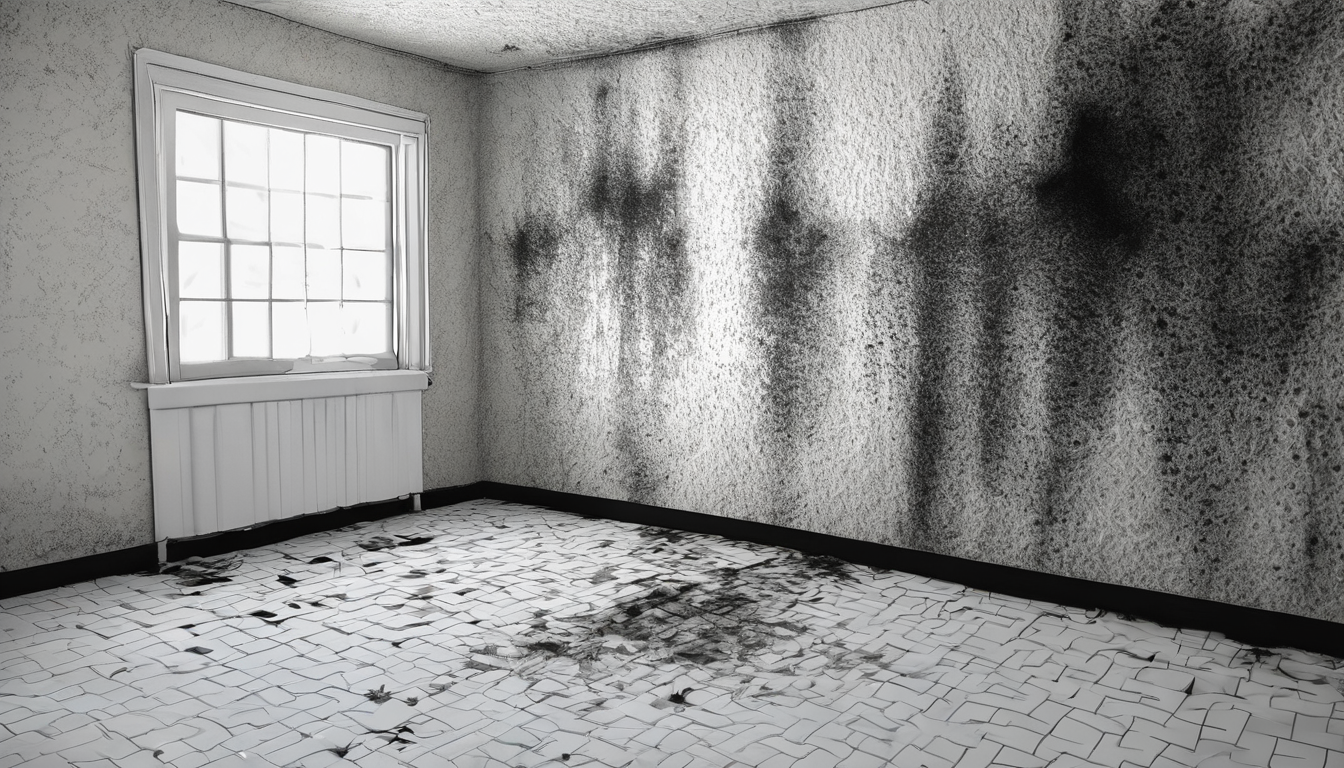
Understanding Black Mold Remediation: Scope, Process and Verification is essential. In Dubai’s climate, black mold remediation scope, process and verification cannot be reduced to a generic checklist. The UAE’s combination of extreme heat, high ambient humidity, and year-round mechanical cooling creates conditions where mould growth follows building science patterns that differ significantly from temperate climates. Understanding those patterns is the foundation of every reliable remediation outcome — and it is where precision begins.
Black mold remediation: scope, process and verification is a structured discipline, not a single action. When Dubai homeowners or property managers encounter dark staining on walls, persistent musty odours, or occupant symptoms linked to indoor air quality, the immediate question is rarely answered by what is visible. Laboratory-confirmed identification, moisture mapping, and contamination boundary work must precede any physical removal. Without that sequence, remediation becomes cosmetic — and regrowth becomes predictable.
As an IAC2 Certified Indoor Air Consultant with over 20 years of field investigations across Dubai villas, high-rise apartments, and commercial facilities, I have seen the same pattern repeatedly: properties treated without proper scope definition return within months with the same problem. The mould was removed. The conditions that produced it were not addressed. This article explains how to break that cycle.
Black Mold Remediation: Scope, Process and Verification – What Black Mold Remediation Scope Actually Means
Scope in black mold remediation refers to the precise boundaries of contaminated material — what must be removed, what can be cleaned, and what must remain protected during work. Defining scope incorrectly in either direction causes problems. An undersized scope misses hidden colonisation. An oversized scope causes unnecessary structural damage and cost without improving outcomes.
In Dubai properties, scope determination begins with a systematic investigation. Saniservice specialists conduct moisture mapping using calibrated pin and pinless moisture metres, thermal imaging to identify hygrothermal anomalies behind surfaces, and borescope inspection to examine cavities without demolition. Air sampling and surface sampling are analysed in Saniservice’s in-house microbiology laboratory — the only facility of its kind operated by an indoor environmental services company in the UAE. This relates directly to Black Mold Remediation: Scope, Process and Verification.
Why Dubai Buildings Require Scope-Specific Assessment
Dubai’s building stock spans a wide range — from older villas in Jumeirah and Mirdif with single-skin block construction to modern high-rise apartments in Business Bay and Dubai Marina with complex curtain-wall envelopes. Each building type presents different moisture pathways. Condensation forms differently on concrete-core walls than on glass-and-aluminium facades. Scope that works for one property type may be entirely insufficient for another.
Additionally, black mold remediation scope in UAE properties frequently expands once wall cavities and ceiling voids are accessed. What appears as a 0.5 square metre surface stain often represents a significantly larger colonised area within the substrate or insulation layer behind it. Scope finalisation should always follow initial cavity inspection, not precede it. When considering Black Mold Remediation: Scope, Process and Verification, this becomes clear.
Black Mold Remediation: Scope, Process and Verification – The Black Mold Remediation Process Step by Step
Black mold remediation: scope, process and verification follows a sequence that IAC2 and IICRC S520 standards define clearly. Deviation from that sequence — even with good intentions — introduces cross-contamination risk and compromises the validity of post-remediation verification.
Step 1: Containment Design and Negative Pressure Setup
Before any material is disturbed, physical containment is established. In Dubai residential properties, this typically means full-barrier polyethylene sheeting from floor to ceiling, sealed with tape, with a dedicated entry airlock. HEPA-filtered negative air machines are positioned to draw airflow away from unaffected areas and exhaust it safely. This step is non-negotiable — disturbing colonised material without containment disperses spores throughout the property. The importance of Black Mold Remediation: Scope, Process and Verification is evident here.
In occupied buildings — a common scenario in Dubai apartments where full vacation is not feasible — containment design becomes even more critical. Saniservice’s containment protocols are designed to allow remediation work to proceed in isolated zones while occupants remain in unaffected areas, with air quality monitoring confirming boundary integrity throughout.
Step 2: Source Moisture Correction
Black mold remediation cannot succeed without first correcting the moisture source. In Dubai properties, common moisture sources include chilled water pipe condensation, HVAC drain pan overflow, roof membrane failure, perimeter waterproofing defects, and inadequate vapour barriers in ground-floor slabs. Removing mould from a surface that remains wet produces a temporary result, not a remediated one. Understanding Black Mold Remediation: Scope, Process and Verification helps with this aspect.
Moisture correction is documented before physical removal begins. This is a core principle in black mold remediation scope, process and verification — and it is frequently the step that separates a durable outcome from a recurring problem.
Step 3: Controlled Removal of Contaminated Materials
Porous materials that have been colonised — gypsum board, insulation, timber framing, ceiling tiles — are removed in controlled sections and double-bagged in sealed polyethylene before being transported through containment. Non-porous surfaces with surface colonisation are cleaned using appropriate biocidal agents applied according to the specific species identified in laboratory analysis. Black Mold Remediation: Scope, Process and Verification factors into this consideration.
Species identification matters here. Black mold remediation scope, process and verification is not a generic protocol. Stachybotrys chartarum — the organism commonly referred to as “black mould” — requires different handling considerations than Cladosporium, Aspergillus niger, or Penicillium species, all of which can appear dark-coloured on surfaces. Laboratory identification confirms the actual organism and informs the remediation method.
Step 4: HEPA Vacuuming and Surface Preparation
After material removal, all surfaces within containment are HEPA-vacuumed to capture residual spore load. This step is often skipped in non-professional remediation attempts — and its omission is detectable in post-remediation air sampling. Fine particulate matter, including spore fragments below 1 micron, remains airborne and settleable long after visible mould is removed. HEPA vacuuming addresses that residual load before verification sampling begins. This relates directly to Black Mold Remediation: Scope, Process and Verification.
Black Mold Remediation: Scope, Process and Verification – Verification: The Step That Confirms Remediation Success
Black mold remediation: scope, process and verification places verification as an equal pillar to the remediation work itself. Verification is not optional — it is the only objective measure of whether remediation achieved its intended outcome. Visual inspection alone is insufficient and does not meet professional standards.
Post-Remediation Air Sampling
Air sampling using spore trap cassettes or polymerase chain reaction (PCR) analysis captures the airborne fungal load inside previously affected areas and compares it against outdoor reference samples and unaffected interior control samples. Per IAC2-aligned methodology, post-remediation indoor spore counts should not significantly exceed outdoor levels for the same genera. Elevated counts after remediation indicate either incomplete removal, inadequate containment, or an unaddressed contamination source. When considering Black Mold Remediation: Scope, Process and Verification, this becomes clear.
Saniservice’s in-house microbiology laboratory in Dubai processes these samples under controlled conditions, with results interpreted by personnel trained in indoor environmental quality assessment. This laboratory capability means interpretation is integrated with field findings — not outsourced to a third party unfamiliar with the property’s building science context.
Surface Sampling and Clearance Documentation
Surface sampling via tape lift or swab confirms that treated surfaces are free of viable colonisation post-remediation. Results are documented in a formal remediation report that includes pre-remediation findings, scope description, methods employed, and post-remediation sampling data. This documentation forms the basis for a mold clearance certificate — a formal record increasingly requested in Dubai property transactions, lease renewals, and DHA-regulated environments. The importance of Black Mold Remediation: Scope, Process and Verification is evident here.
Black mold remediation scope, process and verification is only complete when this documentation exists. Without it, there is no verifiable record that remediation occurred or succeeded — a gap that creates liability for property owners and uncertainty for occupants.
Black Mold Remediation in Dubai’s Climate Context
Dubai’s outdoor temperatures regularly exceed 42°C between June and September, while indoor environments are maintained at 20–24°C by mechanical cooling systems. This 18–22°C differential across building envelopes creates chronic condensation potential on any surface where thermal bridging occurs. Black mold remediation in Dubai must account for this thermal dynamic — otherwise remediated areas simply re-colonise during the following summer cooling season. Understanding Black Mold Remediation: Scope, Process and Verification helps with this aspect.
Black mold remediation scope, process and verification in UAE properties therefore frequently includes recommendations for vapour barrier upgrades, thermal break improvements, HVAC drain line servicing, and relative humidity target-setting for building management systems. These are not remediation steps themselves — they are the building corrections that make remediation durable.
HVAC Systems and Black Mold Remediation Scope
In Dubai apartments and villas, the HVAC system is rarely separate from the mould problem. Split system fan coil units, centralised AHUs, and ducted systems all accumulate organic debris on cooling coils, drain pans, and duct liner surfaces. When relative humidity inside ductwork rises above 60%, colonisation on these surfaces becomes common — and the system then actively distributes spores to every room it serves. Black Mold Remediation: Scope, Process and Verification factors into this consideration.
Black mold remediation scope, process and verification for any Dubai property with ducted HVAC must include a duct assessment. NADCA-aligned inspection protocols establish whether duct surfaces carry biological amplification or simply particulate accumulation — the two conditions require different responses. A mould investigation that ignores the air distribution system is incomplete by definition.
Expert Takeaways for Dubai Property Owners
- Black mold remediation scope, process and verification begins with investigation, not with removal. Scope cannot be defined visually.
- Moisture source correction must precede physical remediation. Mould is a symptom — moisture is the condition.
- Containment and negative pressure protect unaffected areas. These are professional-standard requirements, not optional enhancements.
- Laboratory-confirmed species identification refines the remediation method and mycotoxin risk assessment.
- Post-remediation air and surface sampling are the only objective verification tools. Visual inspection does not confirm clearance.
- In Dubai’s climate, building envelope thermal performance directly affects remediation durability. Address the building, not just the surface.
- Documentation matters. A formal remediation report and mold clearance certificate protect property owners and future occupants.
Frequently Asked Questions
What does black mold remediation scope, process and verification involve in a Dubai villa?
In a Dubai villa, black mold remediation scope, process and verification begins with moisture mapping and laboratory sampling to define contamination boundaries. Physical removal follows under containment with negative pressure. Verification uses post-remediation air and surface sampling analysed in a certified laboratory. Scope varies by property — professional assessment determines the extent before any work begins. This relates directly to Black Mold Remediation: Scope, Process and Verification.
How is black mold different from other mould types found in UAE properties?
The term “black mold” commonly refers to Stachybotrys chartarum, a slow-growing species associated with chronically wet cellulosic materials. However, other species — including Aspergillus niger and Cladosporium — also appear dark-coloured on surfaces in UAE properties. Laboratory identification through microscopy or PCR analysis is required to confirm the species. Remediation methods are refined based on confirmed identification, not visual appearance alone.
Can black mold remediation be verified without laboratory testing?
No. Visual inspection alone cannot confirm that remediation was successful. Post-remediation air sampling and surface sampling, analysed in an accredited laboratory, are the industry-standard verification tools per IAC2 and IICRC S520 protocols. Without laboratory data, there is no objective evidence that spore load returned to acceptable levels after remediation work was completed. When considering Black Mold Remediation: Scope, Process and Verification, this becomes clear.
How does Dubai’s climate affect black mold remediation outcomes?
Dubai’s combination of extreme outdoor heat and cooled interiors creates persistent condensation potential on thermal bridges within building envelopes. If this moisture source is not corrected alongside physical remediation, re-colonisation during the following cooling season is common. Durable remediation outcomes in Dubai require building envelope assessment and, where necessary, corrections to vapour barriers, thermal performance, or HVAC drain management.
What is a mold clearance certificate and when is it required in Dubai?
A mold clearance certificate is a formal document issued following successful post-remediation verification, confirming that treated areas meet acceptable indoor air quality standards for fungal contamination. In Dubai, clearance certificates are increasingly required in property transactions, rental renewals, and facilities regulated by DHA. The certificate should reference laboratory results and be issued by a qualified indoor environmental consultant. The importance of Black Mold Remediation: Scope, Process and Verification is evident here.
How long does the black mold remediation process typically take in a Dubai apartment?
Duration depends on contamination scope, number of affected rooms, and whether HVAC systems require assessment. A single-room remediation in a Dubai apartment may be completed within one to two days of physical work, with post-remediation verification sampling processed within 24–48 hours thereafter. Multi-room or building-envelope-involved cases require a timeline determined during the initial investigation and scope definition phase.
Is black mold remediation in Dubai regulated or certified?
Indoor environmental standards in Dubai are referenced through Dubai Municipality guidelines and DHA frameworks for health-sensitive facilities. Professional remediation should follow internationally recognised protocols — IICRC S520 and IAC2 standards — with documentation issued by certified consultants. Saniservice holds triple ISO certification and operates under NADCA-accredited methodology for HVAC-related contamination assessment.
Conclusion
Black mold remediation: scope, process and verification is a science-based discipline that requires investigation before action, containment during action, and laboratory confirmation after action. In Dubai and across the UAE, where building physics, climate dynamics, and occupant expectations intersect, generic treatments consistently underperform. The path to a durable result begins with defining what is actually present, understanding why it formed, and verifying through data that it has been genuinely resolved.
If dark staining, persistent musty odours, or unexplained indoor air quality concerns are present in a Dubai property, the appropriate first step is a professional assessment — one that produces laboratory data, not just a visual opinion. Black mold remediation scope, process and verification, carried out with the rigour that IAC2 and IICRC standards require, is what separates a lasting solution from a temporary cosmetic correction. That distinction is worth understanding before any work begins. Understanding Black Mold Remediation: Scope, Process and Verification is key to success in this area.