
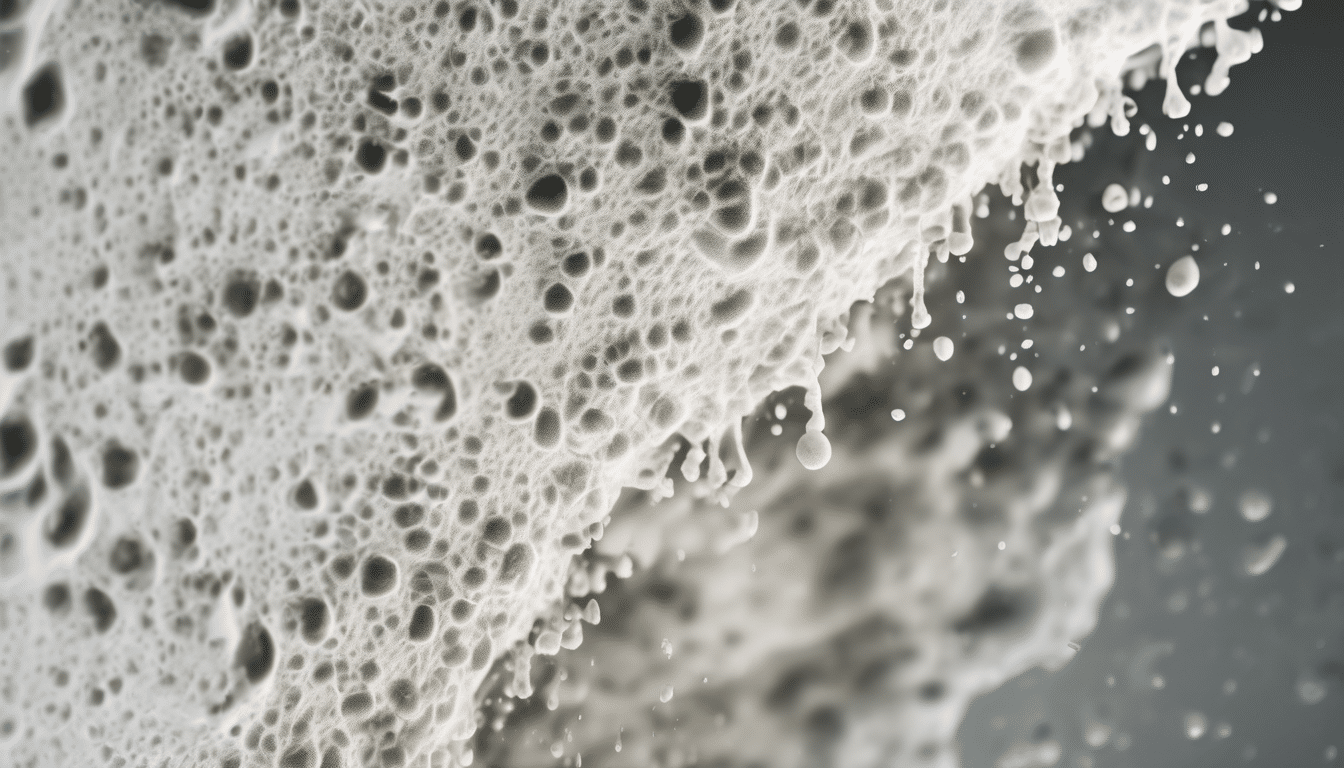
Understanding Mold Growth in High Humidity Environments begins with a fundamental question: why does mold appear where it does, and why does it keep returning? Across Dubai, Abu Dhabi, Sharjah, and the broader UAE, indoor mold is not simply a cleanliness issue. It is a predictable consequence of building physics, biological conditions, and climate — and the region’s extreme humidity makes every property vulnerable in ways that are frequently underestimated.
In our investigations across hundreds of residential villas, apartments, and commercial buildings in the UAE, moisture is the single consistent factor behind every mold problem we encounter. The specific species, the extent of growth, and the health implications vary — but the underlying mechanism is almost always the same. Moisture accumulates where building systems fail to manage it, and mold follows. Understanding that relationship is the foundation of every effective remediation plan. This relates directly to Understanding Mold Growth In High Humidity Environments.
This guide is written for homeowners, property managers, architects, and building professionals who want to move beyond surface-level thinking. Understanding Mold Growth in High Humidity Environments means understanding the biology, the physics, the building failures, and the human consequences — all together, as an integrated system.
Understanding Mold Growth In High Humidity Environments – The Biology of Mold and Why Humidity Matters
Mold is a fungus. It is not a bacterium, not a plant, and not a chemical substance — it is a living organism with its own growth cycle, reproductive strategy, and environmental requirements. Understanding Mold Growth in High Humidity Environments requires that we understand what mold actually needs to survive.
Mold requires four conditions to grow: a food source, suitable temperature, oxygen, and moisture. Of these four, moisture is the only variable that can realistically be controlled inside a building. Food sources — dust, organic debris, cellulose-based building materials — are present in virtually every structure. Temperatures between 15°C and 35°C cover the range of most indoor environments. Oxygen is unavoidable. Moisture is the lever we can actually pull.
Relative Humidity and the 60% Threshold
Mold does not require standing water to grow. Many species can colonise surfaces when relative humidity (RH) consistently exceeds 60–65%. At 70% RH and above, growth accelerates significantly. In the UAE, outdoor humidity regularly exceeds 80–90% during summer months, and during the high-humidity season from June through September, it can reach saturation levels at night.
When this outdoor air enters a building — through doors, windows, ventilation gaps, or infiltration — and contacts cool surfaces cooled by air conditioning, condensation forms. That moisture is sufficient for mold to begin colonising within 24 to 72 hours under favourable conditions. This is not exceptional behaviour. It is precisely what the biology predicts. When considering Understanding Mold Growth In High Humidity Environments, this becomes clear.
Mold Spores Are Always Present
A common misconception is that mold spores must be introduced from outside. In reality, mold spores are ubiquitous in indoor and outdoor air at all times. Mold growth does not require an introduction event — it simply requires the right conditions. When humidity provides those conditions, colonisation is essentially inevitable on vulnerable materials.
Understanding Mold Growth In High Humidity Environments – UAE Climate Conditions and Mold Risk
The UAE presents a climate profile that is genuinely challenging for indoor moisture management. Summer temperatures frequently exceed 45°C outdoors, while air-conditioned interiors are maintained at 20–24°C. This temperature differential — often 20°C or more across a building envelope — creates the conditions for continuous condensation on surfaces where insulation is absent or inadequate.
Understanding Mold Growth in High Humidity Environments in the UAE context means recognising that this is not a seasonal problem. The combination of high outdoor humidity, intense solar loading on building envelopes, and powerful air conditioning creates year-round vulnerability at different points of the building.
Coastal vs Inland Properties
Properties in coastal areas — including much of Dubai, Sharjah, Ajman, and Fujairah — face higher baseline humidity from marine air. Buildings in these locations experience greater moisture pressure on their envelopes. Inland areas such as parts of Abu Dhabi or Ras Al Khaimah see lower ambient humidity but can experience sudden humidity spikes during weather events or khamsin conditions.
In both environments, the physics remain the same. Warm, moisture-laden air contacts cooler surfaces and deposits condensation. What varies is the frequency, intensity, and duration of these events. Coastal buildings face it almost continuously during summer; inland buildings face it in concentrated episodes.
Construction Practices That Increase Risk
Many properties across the UAE were constructed during rapid development periods when moisture management was not always prioritised. Concrete block construction with minimal insulation, insufficient vapour barriers, and building envelopes that were never designed to manage the hygrothermal stresses of this climate are common. These properties are structurally sound but thermally and moisture-wise vulnerable. The importance of Understanding Mold Growth In High Humidity Environments is evident here.
Understanding Mold Growth In High Humidity Environments – How Mold Growth in High Humidity Develops Inside Buildings
Understanding Mold Growth in High Humidity Environments requires tracing the actual pathway from moisture accumulation to visible colonisation. In our laboratory investigations, we consistently observe that visible mold — what the occupant first notices — represents the endpoint of a process that has been underway for weeks or months.
Stage One: Moisture Accumulation
Moisture enters a building through multiple pathways simultaneously. Direct condensation on cool surfaces is the most visible mechanism. But moisture also migrates through building materials by diffusion, driven by vapour pressure differentials. A wall that appears dry on its interior face may be accumulating moisture within its core — within the insulation layer, at the interface between plaster and blockwork, or inside a hollow partition.
HVAC systems contribute significantly to this process. Undersized, poorly maintained, or incorrectly installed systems fail to adequately dehumidify supply air. When the dew point of the air inside a room exceeds the surface temperature of walls, floors, or ceilings, condensation deposits moisture on those surfaces continuously. Understanding Understanding Mold Growth In High Humidity Environments helps with this aspect.
Stage Two: Microbial Colonisation
Once surface moisture is consistently above the threshold — and this does not require visible wetness, only sustained elevated relative humidity at the surface — mold spores that have settled on that surface begin to germinate. Within 24 to 72 hours under optimal conditions, hyphae (the thread-like structures of mold) begin penetrating the substrate material.
At this stage, the growth is invisible to the naked eye. There is no discolouration, no odour, and no visible indicator. This is why early mold detection cannot rely on visual inspection alone. Laboratory analysis of surface and air samples can detect early colonisation before it becomes a visible problem.
Stage Three: Established Colony and Sporulation
As the colony matures, it begins producing spores — the reproductive units that spread through the air and initiate new colonies. At this stage, occupants may begin to detect a musty odour, even before visible growth is apparent. The odour is produced by microbial volatile organic compounds (MVOCs), metabolic byproducts of active mold growth. A musty smell in the absence of visible mold is a significant finding that warrants professional investigation, not dismissal. Understanding Mold Growth In High Humidity Environments factors into this consideration.
Hidden Mold and the Role of HVAC Systems
In UAE buildings, HVAC systems are the single most important factor in Understanding Mold Growth in High Humidity Environments. These systems run continuously for much of the year, handling enormous volumes of hot, humid outdoor air. When they function correctly, they maintain indoor humidity below 60% RH and cool surfaces to temperatures above the dew point. When they fail — or are simply undersized or poorly maintained — they become mold amplification systems.
Mold Inside Ductwork and Air Handlers
Mold growth inside air handling units, on evaporator coils, in drain pans, and throughout ductwork is extremely common in UAE buildings. The interior of an air handler is a near-ideal mold environment: cool, often damp, with a continuous supply of dust-laden air as a food source. Mold colonies within HVAC systems distribute spores throughout the building every time the system operates — which in the UAE is effectively continuous.
In our investigations, we have cultured mold from HVAC systems in properties where the rooms appeared visually clean and the occupants had no idea the system was contaminated. The spore counts in the air of those rooms were elevated significantly above outdoor baseline levels. This is a building science problem, not a cleaning problem. This relates directly to Understanding Mold Growth In High Humidity Environments.
Condensation on Supply Air Ducts
Ducts carrying cold supply air through warm, humid ceiling voids are highly vulnerable to external condensation. Where duct insulation is absent, damaged, or incorrectly installed, the outer surface of the duct sits below the dew point of the surrounding air. Condensation forms on the duct exterior, drips onto ceiling tiles, and creates persistent moisture on surfaces that are inaccessible and rarely inspected. Mold growth follows predictably.
Health Implications of Mold in High Humidity Environments
Understanding Mold Growth in High Humidity Environments is not only a building science concern — it is a human health concern. Mold exposure in indoor environments has been associated with a range of adverse health effects, and the relationship between indoor mold and health symptoms is supported by substantial evidence from epidemiological research.
The specific health effects depend on several variables: the mold species present, the concentration of spores in the indoor air, the duration and frequency of exposure, and the individual’s health status and sensitivity. Children, elderly individuals, pregnant women, and those with pre-existing respiratory conditions or compromised immune function are at greater risk. When considering Understanding Mold Growth In High Humidity Environments, this becomes clear.
Respiratory and Allergic Effects
The most commonly documented effects of mold exposure are respiratory and allergic in nature. Nasal congestion, throat irritation, coughing, wheezing, and exacerbation of asthma are consistently associated with elevated indoor mold levels. These symptoms often follow a pattern: they improve when the occupant leaves the building and worsen upon return. That pattern is diagnostically significant and should not be attributed to coincidence without investigation.
Mycotoxins and Toxic Species
Certain mold species produce mycotoxins — secondary metabolites that can cause toxic effects beyond simple allergic responses. Species such as Stachybotrys chartarum, Aspergillus flavus, and several others found in water-damaged buildings are mycotoxin producers. Mycotoxin exposure is a distinct concern from spore exposure, and it requires specific analytical methods to detect and quantify. We perform mycotoxin analysis as part of our laboratory workup in cases involving sensitive occupants or prolonged, unexplained illness symptoms.
Diagnosing Mold Growth in High Humidity Environments Correctly
Correct diagnosis is the prerequisite for effective remediation. Understanding Mold Growth in High Humidity Environments from a diagnostic perspective means gathering evidence — not making assumptions based on visual inspection alone.
Air Sampling and Spore Trap Analysis
Volumetric air sampling using spore traps or impaction cassettes captures airborne particles from a defined volume of air, which are then analysed under microscopy. Comparing indoor spore counts to outdoor baseline samples reveals whether the building is amplifying mold above ambient levels. This is a standard diagnostic step that provides objective data to guide remediation scope.
Surface Sampling and Culture Methods
Surface samples — collected by swab or tape lift — identify what species are present on a given material. Culture-based methods allow species to grow in laboratory conditions for identification, while direct microscopy provides immediate morphological data. Both have their role depending on the diagnostic question being asked.
Moisture Mapping and Thermal Imaging
Understanding Mold Growth in High Humidity Environments diagnostically requires finding where moisture is accumulating before it becomes visible mold. Thermal imaging cameras detect surface temperature differentials that indicate moisture accumulation behind walls, under floors, or above ceilings. Moisture metres confirm the presence of elevated water content in building materials. Together, these tools allow us to map the moisture pathways driving the mold problem — which is essential information for any remediation plan designed to prevent recurrence.
Borescope Inspection for Hidden Cavities
Where thermal imaging suggests moisture within a wall or ceiling cavity, borescope inspection allows visual confirmation without destructive opening. A small access point — sometimes as small as 12mm — allows the camera to examine the interior of a cavity, revealing hidden mold growth, condensation, or material damage that would otherwise be invisible.
Remediation Principles for High Humidity Environments
Understanding Mold Growth in High Humidity Environments leads directly to understanding why conventional remediation so often fails. Applying antifungal spray to a mold-affected surface without correcting the moisture source is not remediation. It is deferred failure. The mold will return — often within weeks — because the biological and physical conditions that produced it have not changed.
Moisture Source Correction First
No remediation plan is complete without addressing the moisture source. If the source is a failed HVAC system, it must be repaired or replaced. If it is a thermal bridge causing surface condensation, the insulation defect must be corrected. If it is vapour infiltration through a building envelope, the air sealing must be improved. Mold removal without moisture correction is temporary at best. The importance of Understanding Mold Growth In High Humidity Environments is evident here.
Containment and Cross-Contamination Prevention
Active mold colonies release spores in large quantities when disturbed. Remediation work that is not properly contained can distribute spores throughout an otherwise unaffected building, significantly expanding the contamination. Negative pressure containment, HEPA filtration, and proper personal protective equipment are not optional refinements — they are fundamental requirements for responsible mold removal in occupied buildings.
Material Assessment and Removal Decisions
The decision to clean a material versus remove and replace it depends on the extent of colonisation and the porosity of the material. Porous materials — plasterboard, ceiling tiles, carpet, insulation — that have been colonised to their depth cannot be adequately cleaned. They must be removed. Non-porous materials can often be effectively cleaned with appropriate methods and verified by post-remediation sampling.
Post-Remediation Verification
Remediation should not be considered complete until independent post-remediation verification has confirmed that spore levels have returned to acceptable baseline levels and that moisture conditions have been normalised. This verification should involve laboratory-analysed air and surface samples — not just visual inspection by the remediation contractor. An independent verification step protects the occupant and provides documented confirmation of success. Understanding Understanding Mold Growth In High Humidity Environments helps with this aspect.
Long-Term Prevention Strategies for UAE Properties
Understanding Mold Growth in High Humidity Environments ultimately serves the goal of prevention. Once a property has been properly remediated and its moisture problems corrected, the priority becomes maintaining those conditions over time. In the UAE climate, this requires active management — not a one-time fix.
HVAC Maintenance and Performance Monitoring
HVAC systems in UAE properties should be serviced at minimum every six months — and for properties with known mold history or vulnerable occupants, quarterly inspection is more appropriate. Servicing should include coil cleaning, drain pan inspection, filter replacement, and verification of system performance including supply air temperature and humidity levels. A system that is producing supply air above 12–14°C dew point is not adequately dehumidifying and represents a continuous mold risk.
Humidity Monitoring
Continuous indoor humidity monitoring using calibrated sensors provides early warning of conditions that favour mold growth. Target indoor relative humidity of 45–55% RH for comfort and mold prevention. When readings consistently exceed 60% RH, the cause should be investigated. Portable dataloggers or building management system-integrated sensors are both effective tools for this purpose. Understanding Mold Growth In High Humidity Environments factors into this consideration.
Building Envelope Maintenance
Sealing gaps around windows, doors, pipe penetrations, and service entries prevents humid outdoor air from bypassing the building’s conditioned envelope. Annual inspection of these points — particularly after any construction or maintenance work — is a prudent measure in UAE buildings.
Annual Professional Inspection
For high-value properties, properties with complex building envelopes, or buildings with occupants who are health-sensitive, annual professional inspection by a qualified indoor environmental consultant is a worthwhile investment. Early detection of moisture accumulation or early-stage mold growth allows intervention before the problem becomes extensive. The cost of a professional inspection — typically in the range of AED 1,500 to AED 4,000 depending on property size and scope — is substantially less than the cost of remediating an established, extensive mold problem.
Expert Takeaways and Key Principles
After more than 20 years of investigating indoor environments across the UAE, I have arrived at a set of principles that consistently hold true. Understanding Mold Growth in High Humidity Environments, applied practically, can be summarised in the following points:
- Mold is a symptom, not the problem. The problem is always moisture — its source, its pathway, and the building failure that allowed it to accumulate.
- Visual inspection is insufficient. Mold can be extensive and growing actively in locations that are visually inaccessible. Science-based diagnostics — air sampling, moisture mapping, thermal imaging — are required for reliable assessment.
- UAE buildings face specific, predictable vulnerabilities. The combination of extreme outdoor humidity, powerful air conditioning, and building envelopes not always designed for hygrothermal performance creates conditions that make mold growth in high humidity a near-inevitability without active management.
- HVAC systems are the first place to investigate. In the UAE context, HVAC failure is the most common root cause of indoor mold. A contaminated HVAC system distributes spores throughout the building continuously and must be addressed as part of any remediation plan.
- Remediation without root-cause correction will fail. This is not a theoretical concern. It is what we observe in case after case where previous remediation attempts used surface treatment without moisture correction.
- Post-remediation verification is not optional. It is the only evidence-based way to confirm that remediation succeeded. Laboratory analysis — not visual inspection — is the standard of verification.
- Prevention is substantially less costly than remediation. A comprehensive remediation project for an extensively contaminated villa in Dubai can cost between AED 15,000 and AED 80,000 or more, depending on scope. Prevention and early detection represent significant financial as well as health savings.
Conclusion
Understanding Mold Growth in High Humidity Environments is not a simple topic, and it should not be approached with simple solutions. Mold in the UAE context is a systems problem — produced by the interaction of extreme climate, building physics, mechanical system performance, and biological reality. Addressing it effectively requires the same integrated, evidence-based approach that the problem itself demands.
For residents of Dubai, Abu Dhabi, Sharjah, Ras Al Khaimah, Fujairah, and Ajman, the risk is real and the climate conditions make it persistent. But mold problems are not inevitable outcomes — they are predictable ones. And predictable problems can be anticipated, detected early, and corrected properly when approached with the right tools, the right knowledge, and the right methodology.
Understanding Mold Growth in High Humidity Environments means accepting that the building is a system, that moisture is the critical variable, and that lasting solutions require addressing root causes rather than visible symptoms. Whether you are a homeowner noticing a musty smell, a property manager concerned about recurring staining, or a building professional designing for durability in this climate — that understanding is where every meaningful action begins.
If you suspect mold growth in your property, the appropriate first step is a professional investigation by a qualified indoor environmental consultant — one who measures, tests, and verifies rather than assumes. The evidence, not the appearance, should guide every decision that follows. Understanding Understanding Mold Growth In High Humidity Environments is key to success in this area.