
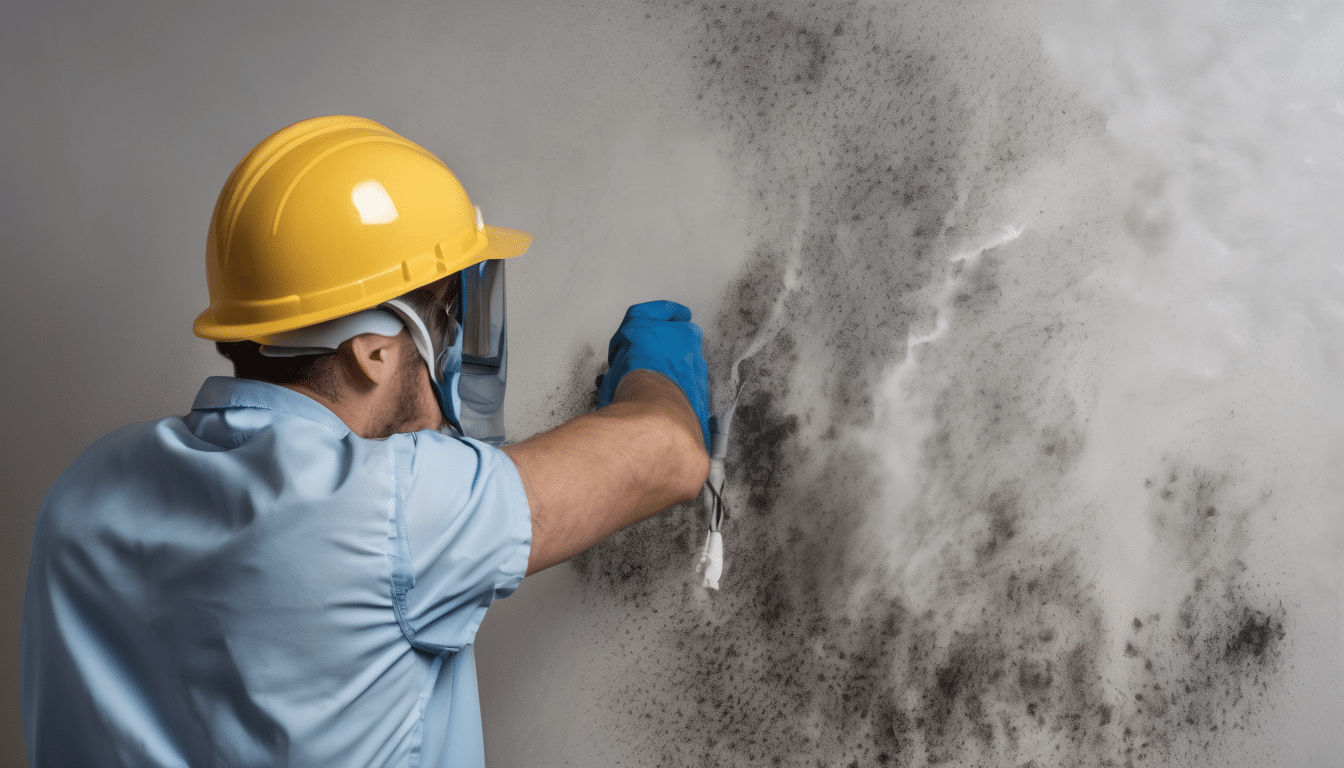
Every year, as Dubai and the wider UAE transition into the intense summer months, building interiors become significantly more vulnerable to moisture accumulation and mould growth. Humidity levels climb, condensation forms on cooled surfaces, and HVAC systems work beyond their design limits. For remediation professionals, this seasonal pressure makes mold remediation training: OSHA standards explained not merely a regulatory checkbox — it becomes a practical field necessity.
The Occupational Safety and Health Administration (OSHA) does not have a dedicated mould-specific standard. However, its General Duty Clause — Section 5(a)(1) — requires employers to protect workers from recognised hazards, including biological contaminants such as mould. Understanding how OSHA’s broader framework applies to mould remediation is central to any serious mold remediation training programme. For professionals in Dubai, Abu Dhabi, Sharjah, and across the UAE, this knowledge is directly applicable even though local regulatory authorities differ, because the underlying science and worker protection principles remain universal. This relates directly to Mold Remediation Training: Osha Standards.
This article provides a detailed breakdown of mold remediation training: OSHA standards explained clearly and practically, with particular attention to the environmental conditions found across the UAE. Whether you manage a remediation team, oversee facility operations, or are evaluating a mould contractor’s credentials, understanding these standards will help you ask the right questions and make better decisions.
Mold Remediation Training: Osha Standards – Why OSHA-Based Training Matters for Mould Remediation
Mould remediation is not cleaning. It is a technical intervention into a biologically active environment, and it carries meaningful risks for workers who are not properly trained. Without correct training, remediation activities can aerosolise mould spores, spread contamination to previously unaffected areas, and expose workers to mycotoxins and allergens that cause both short- and long-term health consequences.
OSHA’s approach to mould is grounded in its broader hazard communication and respiratory protection standards. These apply directly to anyone disturbing mould colonies during investigation, removal, or containment. A proper mold remediation training: OSHA standards explained programme ensures workers understand not just what to do, but why each protective measure exists at the biological and physical level.
In our investigations across Dubai and Abu Dhabi, we have encountered remediation projects where workers were using inadequate respiratory protection, containment was poorly established, and spore counts in adjacent rooms were elevated post-remediation. These are not isolated incidents — they reflect the absence of structured training grounded in recognised standards.
Mold Remediation Training: Osha Standards – Seasonal Mould Risk in the UAE and Training Implications
The UAE experiences two distinct seasons that each elevate mould risk, though in different ways. From May through September, outdoor temperatures frequently exceed 42°C. Buildings are sealed and air-conditioned, creating sharp thermal differentials between interior surfaces and ambient air. This drives condensation on walls, ceilings, and within HVAC ductwork — conditions highly favourable to mould colonisation.
During the brief winter months, particularly from December through February, rainfall events — though infrequent — can cause rapid water intrusion into buildings not designed for drainage management. Flash flooding in areas such as Deira, Sharjah, and parts of Ras Al Khaimah has repeatedly resulted in post-flood mould cases within 48 to 72 hours. Remediation teams called out during these events are working in compressed timelines with elevated contamination risk.
This seasonal pattern means that mold remediation training: OSHA standards explained is not a static annual exercise. Training must be refreshed and operationally rehearsed before each high-risk season. Teams should review containment protocols, PPE inspection procedures, and spore transport risks in advance of the summer humidity peak, which typically begins in late April each year.
Mold Remediation Training: Osha Standards – The OSHA Regulatory Framework Applied to Mould Work
OSHA addresses mould remediation through several intersecting standards, even in the absence of a dedicated mould rule. Understanding which standards apply is a foundation of mold remediation training: OSHA standards explained correctly.
Relevant OSHA Standards
- 29 CFR 1910.134 — Respiratory Protection: This standard governs the selection, use, and maintenance of respirators. It requires a written respiratory protection programme, medical evaluations, and fit testing for workers using tight-fitting respirators.
- 29 CFR 1910.132 — Personal Protective Equipment: Employers must conduct hazard assessments and provide appropriate PPE at no cost to workers.
- 29 CFR 1910.1200 — Hazard Communication: Workers must be informed of chemical hazards, including biocides used during remediation.
- General Duty Clause — Section 5(a)(1): Employers must address recognised biological hazards, including mould, even where no specific standard exists.
Additionally, OSHA’s guidelines on bloodborne pathogens and general industry standards for confined space and ladder safety may apply depending on the remediation environment. Comprehensive mold remediation training: OSHA standards explained covers the full matrix of applicable rules, not just the most obvious ones.
Core Components of Mold Remediation Training OSHA Standards Explained
A properly designed mold remediation training programme informed by OSHA standards covers several interconnected domains. Each one addresses a distinct aspect of worker safety and remediation effectiveness.
Mould Biology and Health Risks
Workers must understand what mould is, how it grows, and what it produces. This includes an introduction to common genera such as Aspergillus, Cladosporium, Stachybotrys, and Penicillium. Training should explain spore production, mycotoxin generation, and the airborne transmission pathways that make disturbance so hazardous. Without this biological context, protective measures feel arbitrary and are less consistently followed.
Moisture and Root Cause Identification
Effective mold remediation training: OSHA standards explained programmes go beyond removal technique. Workers should understand moisture mapping, how to identify thermal bridging, and why mould recurs when root causes are not corrected. From a building science perspective, this knowledge prevents remediation failures that require repeat interventions — and repeat exposures.
Work Practices and Engineering Controls
Training must address the sequence of work: assessment before disturbance, containment before removal, verification before clearance. Engineering controls — including negative air pressure, HEPA air scrubbers, and wet methods to suppress aerosolisation — are taught as the first line of defence, with PPE as the secondary layer.
PPE Requirements Under OSHA Guidance for Mould Removal
OSHA’s respiratory protection standard is among the most operationally significant requirements covered in mold remediation training: OSHA standards explained courses. The level of respiratory protection required scales with the size and type of mould contamination.
For small areas (generally below 1 square metre), an N95 filtering facepiece respirator is considered a minimum. For medium contamination areas between 1 and 10 square metres, a half-face respirator with P100 cartridges is recommended. For large-scale contamination above 10 square metres, or wherever Stachybotrys chartarum (often called black mould) is suspected, a full-face respirator or powered air-purifying respirator (PAPR) is appropriate.
Beyond respiratory protection, training covers gloves (nitrile or rubber, not latex), disposable coveralls, and eye protection. In the UAE’s climate, thermal stress during PPE use is a real and documented safety concern. Workers in full Tyvek suits during summer remediation projects in Dubai face heat stress risks that must be managed through scheduled rest periods, hydration protocols, and work duration limits — all of which are addressed in comprehensive mold remediation training.
Containment, Negative Pressure, and HEPA Filtration Training
Containment design is a technical skill that separates trained remediation professionals from unqualified operators. Mold remediation training: OSHA standards explained devotes significant attention to how containment barriers are constructed, maintained, and verified during active removal work.
Negative air pressure within the containment zone prevents cross-contamination. This requires at least one air changes per hour within the contained space, with air exhausted through HEPA filtration. Workers learn how to calculate the required airflow based on room volume, select appropriately rated equipment, and verify pressure differentials using simple measurement tools.
Containment failure is a primary cause of post-remediation clearance test failures. In our laboratory work, we have analysed air samples from adjacent spaces during active remediation and found spore counts significantly elevated — a direct result of inadequate containment. Training that addresses this failure mode in detail reduces the frequency of such outcomes significantly. When considering Mold Remediation Training: Osha Standards, this becomes clear.
Training Levels Based on Remediation Scope
Mold remediation training: OSHA standards explained is not a single uniform programme. The EPA and OSHA guidance documents both recognise that required training scales with the complexity and size of the remediation project.
Level 1 — Small Isolated Areas
Workers addressing small mould patches (under 1 square metre) require basic awareness training: recognition of mould, N95 use, surface wetting before disturbance, and bagging of materials. This is appropriate for maintenance personnel in residential or commercial settings.
Level 2 and 3 — Medium to Large Areas
These levels require full containment, negative pressure, half-face or full-face respiratory protection, and structured work practices. Training must include hands-on demonstration of containment setup and PPE donning and doffing procedures. Post-removal cleaning and HEPA vacuuming techniques are also covered.
Level 4 — Extensive Contamination
For large contamination areas or HVAC system remediation, full training equivalent to a professional mould remediation technician or supervisor is required. This includes understanding air sampling interpretation, clearance criteria, and chain-of-custody documentation for laboratory samples. This is the level at which formal certification — through bodies such as the IAC2 or IICRC — becomes directly relevant.
Documentation, Verification, and Post-Training Accountability
A well-designed mold remediation training: OSHA standards explained programme does not end with instruction — it includes documentation of training completion, competency verification, and ongoing accountability mechanisms. OSHA’s standards require employers to maintain records of respiratory protection fit testing, PPE hazard assessments, and worker training dates.
Post-remediation verification — including air sampling and surface sampling — should be taught as a mandatory component of any remediation project, not an optional add-on. Workers who understand why clearance testing is performed are more likely to maintain the work standards that support a successful clearance result. Laboratory findings should be interpreted with the same rigour applied to the initial assessment.
Applying OSHA Mold Remediation Training Standards in the UAE
While OSHA is a US regulatory body, its standards represent the most comprehensive publicly available framework for mould remediation worker safety. In the UAE, the Ministry of Human Resources and Emiratisation (MOHRE) and relevant municipality authorities govern occupational health and safety. However, specific mould remediation standards at the UAE level remain less developed than the OSHA framework.
This gap makes mold remediation training: OSHA standards explained directly relevant for UAE-based professionals. By voluntarily adopting OSHA-aligned training frameworks, companies in Dubai, Sharjah, Abu Dhabi, and Fujairah can ensure their workers receive a level of protection that meets or exceeds what local regulations currently mandate. This is not merely ethical — it is also commercially defensible. Clients and insurers are increasingly asking for documented evidence of worker training and remediation competence.
Remediation companies offering services across the UAE should consider training costs as a professional investment. A structured training programme for a remediation team of five technicians, including certification fees, PPE, and equipment, typically ranges between AED 8,000 and AED 20,000 depending on the depth of the programme and whether formal certification is pursued. This investment is modest relative to the liability exposure of an inadequately trained team causing cross-contamination or worker injury.
Key Takeaways for UAE Remediation Professionals
Mold remediation training: OSHA standards explained provides a clear and actionable framework for every team member involved in mould work — from supervisors to field technicians. The following principles summarise what every trained professional should understand before any remediation project begins.
- Containment must be established before any mould disturbance occurs — never after.
- Respiratory protection must be fit-tested and medically cleared, not simply supplied.
- Mould removal without root cause correction is remediation failure deferred, not resolved.
- Post-remediation air sampling is a verification step, not a marketing exercise.
- Seasonal risk peaks in the UAE — training must be refreshed before each summer humidity cycle.
- Documentation of training, PPE assessments, and clearance results is a professional and legal necessity.
- OSHA standards, though US-originating, represent the most scientifically grounded guidance available for mould remediation worker safety globally.
Understanding mold remediation training: OSHA standards explained is not an academic exercise. In a building environment as challenging as the UAE’s — with extreme heat, sealed construction, and seasonal humidity events — it is the difference between a remediation project that succeeds and one that simply displaces the problem. Every professional working in this field should be able to answer, clearly and with confidence, what standard they trained to and why.