
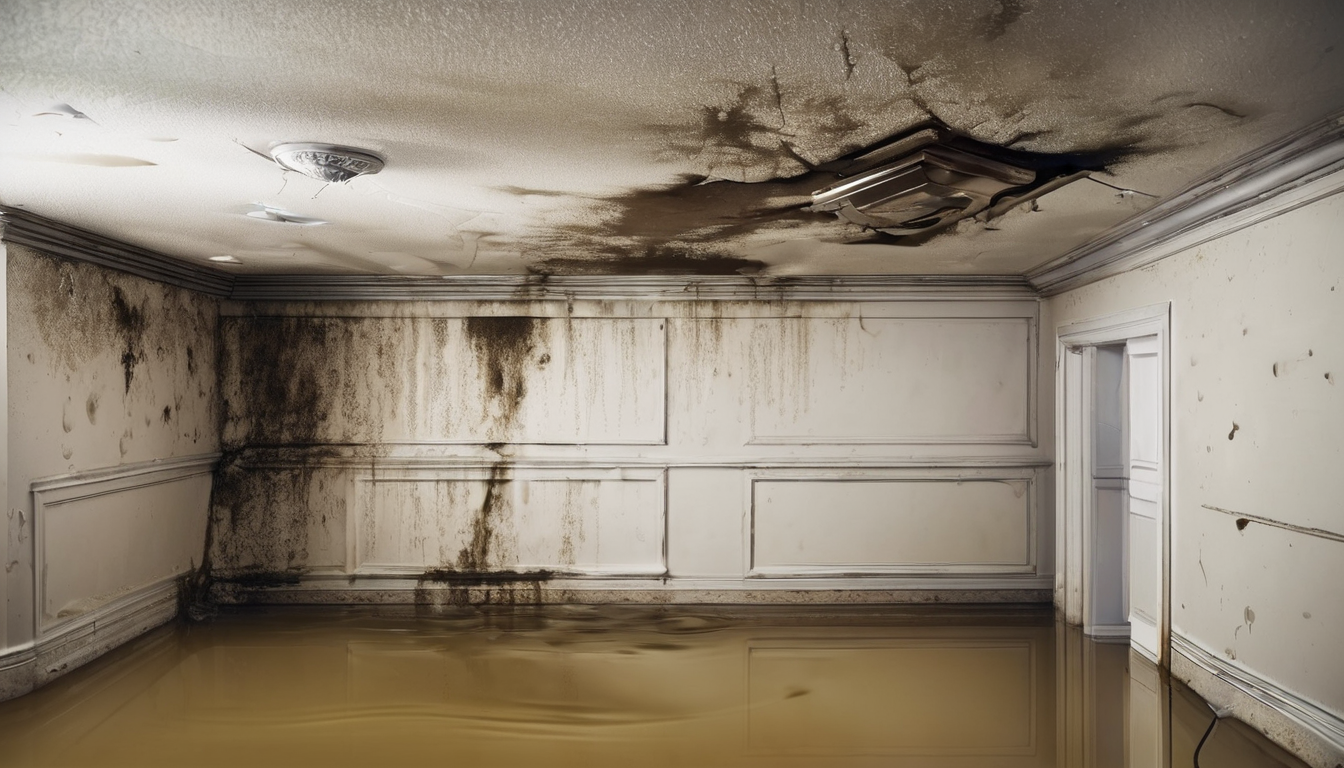
Water damage mold restoration in Dubai properties is not a single service — it is a sequence of interconnected decisions driven by evidence, building science, and microbiology. When water enters a structure through a burst pipe, AC condensate overflow, roof penetration, or a slow concealed leak, the clock starts immediately. In Dubai’s ambient humidity, which regularly exceeds 70% during the summer months, mold colonisation can begin on wetted porous materials within 24 to 48 hours. Understanding what restoration actually involves — and what separates a genuine remediation outcome from a cosmetic surface clean — is the starting point for every property owner facing this situation.
Dubai’s built environment presents specific challenges that differ significantly from temperate climates. High-rise apartments in areas such as Downtown Dubai, JLT, and Business Bay share ventilation shafts, drainage stacks, and centralised HVAC systems. Villas in communities like Arabian Ranches, Emirates Hills, and Jumeirah Park often feature complex building envelopes with cavities, rendered external walls, and concealed MEP services that create ideal conditions for hidden moisture accumulation. Water Damage Mold restoration in Dubai properties must account for these architectural realities from the very first site visit.
Why Water Events in Dubai Escalate Faster Than Owners Expect
The combination of high ambient temperature, elevated relative humidity, and buildings that are sealed tightly for air conditioning creates a hygrothermal environment that accelerates microbial activity. When water saturates gypsum board, floor screed, or ceiling tiles, the moisture does not simply evaporate — it redistributes into cavities, behind wall finishes, and beneath flooring systems where conditions remain undisturbed.
Based on field investigations conducted across Dubai properties, a concealed leak running for two to four weeks commonly produces mold colonies well behind the visible surface. By the time a homeowner notices discolouration or an earthy odour, the active growth area frequently extends significantly beyond the visible patch. This is why water damage mold restoration in Dubai properties must begin with a structured investigative phase, not immediate removal.
The Role of Building Materials
Many Dubai residential builds from the 2000s and early 2010s use lightweight gypsum board partitions, paper-faced insulation, and mineral fibre ceiling tiles — all of which are cellulose-rich, nutrient-dense substrates for fungal growth. When these materials are wetted and not dried within the critical early window, restoration becomes significantly more complex. Laboratory analysis from Saniservice’s in-house microbiology facility consistently identifies Aspergillus, Penicillium, and Cladosporium species in post-water-event samples from Dubai residential properties.
Water Damage Mold Restoration in Dubai Properties — The Investigative Phase
Effective restoration begins with defining the full scope of contamination — not estimating it visually. As an IAC2 Certified Indoor Air Consultant, the investigative tools I rely on for water damage mold restoration in Dubai properties include thermal imaging cameras, pin and pinless moisture metres, borescope inspection cameras, and laboratory air and surface sampling.
Moisture Mapping
Moisture mapping is the systematic measurement of building material moisture content across the affected zone and its surrounding area. A thermal imaging camera identifies temperature differentials caused by evaporative cooling in wet materials, allowing investigators to locate hidden moisture behind walls and under flooring without destructive access. Pin metre readings then quantify moisture content at specific locations, building a data map of the affected zone.
Without this step, water damage mold restoration in Dubai properties risks treating only the visible area while leaving active moisture — and active mold growth — behind the surface. Recurrence within weeks is the predictable outcome of skipping this phase.
Air and Surface Sampling
Air sampling using spore trap cassettes captures airborne fungal spore concentrations in the affected space. Surface sampling using tape lifts or swabs identifies species present on visible growth. Both sample types are analysed in a certified microbiology laboratory. The results define which mold genera are present, at what concentrations, and how they compare to an outdoor baseline — the standard reference point used in IAC2-aligned assessment protocols.
Containment Design for Safe Water Damage Mold Restoration in Dubai Properties
Once the scope is confirmed by investigation data, the remediation work area must be physically separated from the rest of the occupied property. In Dubai apartments where open-plan living areas adjoin affected bedrooms or bathrooms, containment design is particularly important. Cross-contamination during remediation — disturbing mold colonies without adequate containment — can distribute spores to previously unaffected areas.
Proper containment for water damage mold restoration in Dubai properties involves polyethylene sheeting barriers sealed at penetrations, negative air pressure maintained by HEPA-filtered air scrubbers, and controlled entry and exit points. The negative pressure condition ensures that air within the work area flows outward through filtration rather than migrating to adjacent spaces. This is not optional protocol — it is the standard that separates professional remediation from surface-level treatment.
The Remediation Process — What Water Damage Mold Restoration in Dubai Properties Actually Involves
Remediation scope is determined by the type of material, the extent of contamination confirmed by laboratory data, and the moisture levels measured during the investigative phase. Non-porous materials — ceramic tiles, painted concrete, glass — can typically be cleaned and treated in place if contamination is limited to the surface layer. Porous materials present a different challenge entirely.
Material Removal Decisions
Gypsum board, paper-faced insulation, mineral fibre ceiling tiles, and timber framing that have been wetted and have supported mold growth for more than a brief period are generally removed during water damage mold restoration in Dubai properties. The reasoning is straightforward: fungal hyphae penetrate into the material matrix. Surface application of antimicrobial agents cannot reach growth within the material structure. Removal eliminates the contaminated substrate entirely.
The removed materials are double-bagged in heavy-duty polyethylene, sealed, and removed from the property through a controlled route that avoids occupied spaces. Disposal follows applicable Dubai Municipality waste handling guidelines.
Cleaning, Treatment, and Drying
Remaining structural surfaces within the containment zone are HEPA vacuumed, then cleaned with an EPA-registered antimicrobial solution appropriate to the surface type. Following cleaning, the area undergoes a controlled drying phase. Portable dehumidifiers and air movers are deployed to drive moisture content in remaining structural elements to within acceptable limits before any reconstruction begins. Water damage mold restoration in Dubai properties that skips controlled drying and proceeds directly to reconstruction creates conditions for recurrence — moisture sealed behind new finishes continues to support microbial activity.
Post-Remediation Verification — The Evidence That Restoration Worked
The completion of physical remediation work does not itself confirm successful water damage mold restoration in Dubai properties. Verification requires a return to the laboratory. Post-remediation air sampling, conducted after containment is cleared and the space has stabilised, compares current airborne spore concentrations to the pre-remediation baseline and the outdoor reference sample.
A verified successful outcome is one where indoor spore concentrations fall within the range of the outdoor baseline, and where no unusual mold genera identified during the initial investigation remain elevated indoors. At Saniservice, this verification step is documented in a formal post-remediation report — the same data set that supports issuance of a Mold Clearance Certificate where required by a property transaction or regulatory process.
Mold Clearance Certificates in Dubai
For properties involved in sale, lease renewal, or DHA-related occupancy processes, a mold clearance certificate provides documented evidence that remediation has been completed and independently verified. The certificate references the laboratory results, the remediation scope, and the professional credentials of the assessing consultant. Water damage mold restoration in Dubai properties that ends without laboratory verification leaves the property owner without evidence that the work achieved its intended outcome.
Addressing the Root Cause — Preventing Recurrence After Restoration
Water damage mold restoration in Dubai properties fails long-term when the source of moisture is not corrected before or during the remediation process. Mold is a biological indicator of a moisture problem — removing the mold without eliminating the moisture source is a temporary measure at best.
Root cause investigation runs parallel to remediation in a properly structured project. Common sources identified in Dubai properties include failed waterproofing at bathroom wet areas, AC condensate drain blockages or disconnected drain lines, roof membrane failures, inter-apartment plumbing leaks, and inadequate HVAC humidity control in spaces that are under-cooled during summer. Each of these requires a different corrective action — and that corrective action must be completed before the restoration scope is considered closed.
Expert Takeaways for Property Owners
- Visible mold following a water event is rarely the full extent of contamination — professional moisture mapping defines the actual scope.
- The 24–48 hour window after water intrusion is critical. Early professional intervention reduces remediation scope significantly.
- Water damage mold restoration in Dubai properties must include controlled drying of structural elements before any reconstruction is undertaken.
- Post-remediation laboratory verification is the only method that confirms restoration was effective — visual inspection alone is insufficient.
- Correcting the moisture source is not optional. Water damage mold restoration in Dubai properties without source correction will require repetition.
- Documentation matters. Laboratory reports, moisture mapping data, and remediation records protect property owners during future transactions.
Frequently Asked Questions
How quickly does mold develop after water damage in Dubai?
In Dubai’s climate, where indoor relative humidity can remain elevated even with air conditioning running, mold colonisation on wetted porous materials can begin within 24 to 48 hours. High ambient temperatures accelerate fungal germination. Professional moisture assessment within the first 24 hours after a water event gives the best opportunity to limit the extent of required remediation.
What does water damage mold restoration in Dubai properties typically involve?
Water damage mold restoration in Dubai properties involves a structured sequence: investigative assessment with moisture mapping and air sampling, containment design, removal of contaminated porous materials, cleaning and antimicrobial treatment of remaining surfaces, controlled structural drying, and post-remediation laboratory verification. The scope is determined per property based on investigation data, not a generic template.
Is visual inspection enough to confirm mold after water damage?
Visual inspection alone is not sufficient. Mold growth commonly develops in concealed cavities — behind gypsum board, under floor screeds, above ceiling tiles — where it is not visible. Thermal imaging and moisture mapping reveal active moisture zones, while air and surface sampling confirm whether fungal contamination is present beyond what is visible to the eye.
Why does mold return in Dubai properties after remediation?
Recurrence after water damage mold restoration in Dubai properties is most commonly caused by two factors: incomplete removal of contaminated material, or failure to correct the original moisture source. If the moisture pathway — a leaking AC drain, failed waterproofing, or concealed pipe fault — is not rectified, the conditions that supported initial mold growth return, and so does the mold.
What is a mold clearance certificate and when is it needed in Dubai?
A mold clearance certificate is a formal document based on post-remediation laboratory results confirming that indoor mold levels have returned to acceptable concentrations. In Dubai, clearance certificates are relevant for property sales, tenancy renewals, and occupancy processes where the property history includes water damage or prior mold treatment. The certificate references measurable laboratory data rather than a visual opinion.
Can AC systems contribute to water damage mold problems in Dubai apartments?
Yes. AC condensate drain blockages and disconnected drain lines are among the most frequently identified moisture sources in water damage mold restoration cases across Dubai apartments. When condensate cannot drain correctly, it overflows into ceiling voids, wall cavities, and floor screeds — often without visible signs at the surface until significant concealed mold growth has developed.
How do I know if water damage behind my wall has caused mold in my Dubai home?
Common indicators include persistent musty odour, unexplained respiratory irritation among occupants, visible staining on wall finishes, or a history of a water event in the adjacent area. Professional assessment using thermal imaging, moisture metres, and borescope inspection of the cavity — followed by laboratory air sampling — provides data-confirmed answers rather than assumptions.
Closing Thoughts on Water Damage Mold Restoration in Dubai Properties
There is a point in every well-managed restoration project where the laboratory results come back and the data confirms what the process was designed to achieve — indoor spore concentrations within reference range, no residual elevation of the species identified at the outset, structural moisture readings within acceptable parameters. That moment is what water damage mold restoration in Dubai properties is working toward. Not a surface that looks clean, but a building that tests clean.
For property owners in Dubai, the path to that outcome runs through investigation, evidence, proper containment, root cause correction, and independent verification. Each step is connected. Skipping any one of them shifts the project from genuine restoration to temporary management. If you have experienced a water event in your property and are uncertain about the current state of your indoor environment, the right starting point is a professional assessment — not a visual guess. Understanding Water Damage Mold Restoration in Dubai Properties is key to success in this area.