
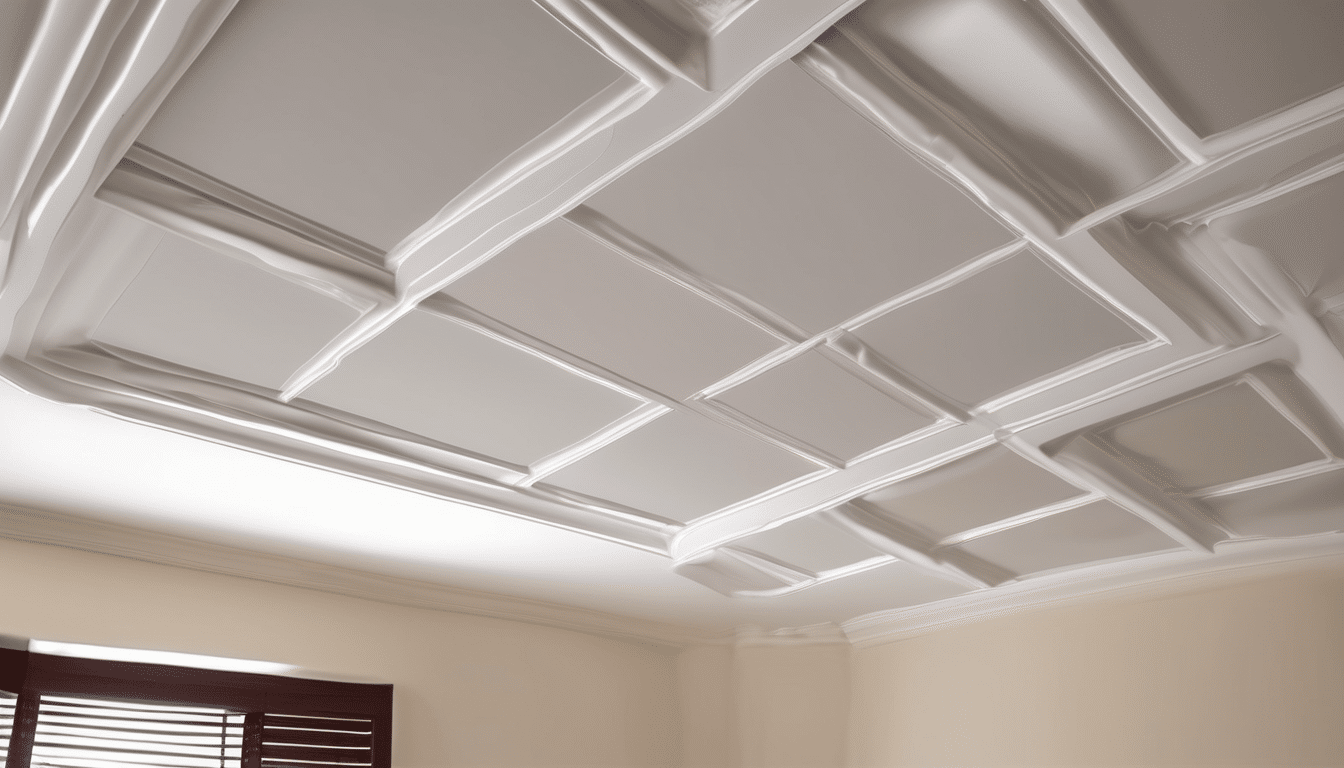
AC Duct Leaks causing ceiling mould UAE-wide is one of the most consistently misdiagnosed problems I encounter in the field. Homeowners see a grey or black discolouration spreading along a ceiling, treat it as a cosmetic issue, and repaint. Within weeks, it returns. The reason is almost always the same: somewhere above that gypsum board, cooled air is escaping from a pressurised duct into an unconditioned ceiling void — and in a climate where outdoor humidity regularly exceeds 80%, that combination produces mould as reliably as any laboratory experiment.
The problem is structural, not superficial. Understanding it properly requires thinking about building physics, not just biology. As an IAC2 Certified Indoor Air Consultant and Certified Mold Professional, I have investigated hundreds of ceiling mould cases across Dubai, Abu Dhabi, Sharjah, and Ajman. In a significant proportion of recurring cases, the root cause traces directly to the HVAC system concealed above the ceiling — not to a water pipe, not to rainwater ingress, and not to poor housekeeping. This relates directly to AC Duct Leaks Causing Ceiling Mould UAE.
This guide explains the mechanics behind AC duct leaks causing ceiling mould in UAE properties, how to identify the warning signs, and what a structured investigation and remediation process should look like.
Why AC Duct Leaks Causing Ceiling Mould UAE Is a Building Physics Problem
To understand why duct leaks produce mould so reliably in the UAE, it helps to understand what happens when cold air meets a warm, humid surface. Supply ducts in UAE buildings typically carry air cooled to between 12°C and 16°C. The ceiling void above a gypsum Board Ceiling can reach 40°C or more during summer months. When cooled air escapes from a leak in that pressurised ductwork, it contacts the warm structural surfaces of the void — slabs, beams, and insulation — and causes condensation.
Condensation means liquid water. Liquid water on a porous surface means mould within 24 to 48 hours under the right biological conditions. In the UAE, those biological conditions — warmth, organic material from construction dust and insulation fibres, and elevated humidity — are almost always present. The mould that develops is not random. It follows the moisture gradient, which follows the air leak.
The Role of Negative Pressure in Ceiling Voids
Many UAE buildings use ducted split systems or centralised AHU configurations where the ceiling void functions as a return air plenum. In these configurations, negative pressure in the return pathway can actually draw humid outdoor air into the ceiling void through gaps in the building envelope. Combine this with a supply duct leak on the delivery side and you create a self-sustaining moisture engine: cold air leaking out, warm humid air being drawn in. The mould visible on the underside of the gypsum board is often just the surface expression of a much larger contamination zone above it.
How to Identify AC Duct Leaks Causing Ceiling Mould UAE in Your Property
The visible signs of AC duct leaks causing ceiling mould UAE residents typically notice are not always where the leak is located. Mould follows moisture migration paths, which means the discolouration on a bedroom ceiling may originate from a duct joint several metres away. Knowing the difference between a duct leak signature and other moisture sources is the first diagnostic step.
Visual Patterns That Point Toward Duct Leaks
- Mould or staining that follows a linear path across the ceiling, often tracing the route of concealed ductwork
- Discolouration concentrated around duct access panels, diffuser grilles, or linear slot outlets
- Condensation rings or water marks that do not correspond to any overhead pipe or roof penetration
- Mould that returns consistently in the same location after repainting or surface treatment
- Gypsum board that feels soft, bowed, or damp to the touch in isolated ceiling zones
Symptoms That Confirm a HVAC Source
Beyond the visual, occupant experience often provides important diagnostic signals. A persistent musty odour that strengthens when the AC is running — rather than when it is off — is a reliable indicator that the contamination source is within or adjacent to the air handling system. Increased allergy-type symptoms, eye irritation, or respiratory discomfort in specific rooms may reflect elevated spore concentrations being actively redistributed by a leaking supply duct.
Based on field investigations across UAE properties, these symptom patterns are far more consistent with HVAC-linked mould than with static moisture sources such as roof leaks or pipe condensation.
The Most Common Causes of AC Duct Leaks in UAE Buildings
AC duct leaks causing ceiling mould UAE properties suffer from tend to share a small number of common origins. Understanding them is essential for any remediation plan that intends to succeed beyond the first season.
Duct Joint Failure and Inadequate Sealing
Flexible ducting used in UAE residential construction — particularly in villa and apartment builds — is connected at joints using mechanical clips, mastic sealant, or foil tape. Over time, thermal cycling between the cooled interior of the duct and the hot ceiling void causes these joints to expand and contract repeatedly. In buildings more than five to eight years old, this movement commonly causes foil tape to peel and mastic sealants to crack. The resulting gap, even at 5 to 10 millimetres, is sufficient to produce significant moisture deposition in the ceiling void.
Insulation Failure on Supply Ducts
Supply ductwork in the UAE must be insulated to prevent surface condensation on the duct exterior. When insulation is missing, compressed, or water-damaged — which is itself often a consequence of a pre-existing duct leak — the cold outer surface of the duct becomes a condensation surface directly. Mould growth on duct exteriors then transfers spores into the circulating air stream, affecting the entire distribution network.
Undersized or Poorly Balanced Systems
HVAC systems that are not correctly sized for the conditioned space create pressure imbalances that stress ductwork and increase the likelihood of seal failure. Oversized systems that short-cycle — switching on and off more frequently than designed — subject duct joints to greater thermal shock and accelerated wear. This is a commonly observed finding during professional assessment of recurring ceiling mould cases in both Dubai apartments and villa properties. When considering AC Duct Leaks Causing Ceiling Mould UAE, this becomes clear.
Why AC Duct Leaks Causing Ceiling Mould UAE Cases Keep Recurring
The single most common reason AC duct leaks causing ceiling mould UAE homeowners deal with keeps returning is that the treatment addresses the visible mould without addressing the moisture source. Applying a biocidal coating to the underside of a gypsum board ceiling will reduce surface spore counts temporarily. If the duct leak above is not sealed, the moisture input continues, and regrowth follows — typically within one to three months in UAE summer conditions.
The second most common reason is incomplete scope. Mould investigation that does not include access to the ceiling void — whether through borescope inspection, access panel survey, or thermal imaging — cannot confirm the extent of contamination. I have opened ceiling voids in properties that appeared to have localised mould on the surface and found widespread Aspergillus and Penicillium colonisation across insulation and ductwork spanning several square metres. Surface treatment alone would not have resolved this.
Thermal Imaging as a Diagnostic Tool
Thermal imaging is one of the most efficient tools for detecting AC duct leaks causing ceiling mould UAE investigations without unnecessary demolition. A calibrated thermographic survey of the ceiling surface, conducted while the AC system is running, reveals temperature anomalies that correspond to escaped cooled air. These cold zones mark the moisture deposition areas with precision that visual inspection cannot match. When thermal findings align with surface mould patterns, the diagnostic confidence for a duct leak origin increases significantly.
The Correct Investigation Sequence for AC Duct Leaks Causing Ceiling Mould UAE
A structured investigation for AC duct leaks causing ceiling mould UAE properties should follow a defined sequence rather than proceeding to remediation on visual assessment alone. The sequence I apply through the Architectural–Microbiological Investigation Protocol at Saniservice’s Indoor Sciences Division is as follows.
- Initial occupant interview: Document symptom onset, AC system history, prior remediation attempts, and any known water events
- Thermal imaging survey: Identify temperature anomalies and potential cold air leakage zones across all affected ceiling areas
- Moisture mapping: Use a calibrated moisture meter to quantify elevated moisture levels in gypsum board, insulation, and accessible structural elements
- Air sampling: Collect indoor and outdoor comparative air samples to establish baseline spore concentrations and identify dominant species
- Ceiling void access and borescope inspection: Visually confirm duct condition, joint integrity, insulation state, and extent of visible mould growth
- Surface sampling: Collect tape lift or swab samples from contaminated surfaces for laboratory species identification
- Laboratory analysis: Analyse samples in Saniservice’s in-house microbiology laboratory in Al Quoz to confirm species and contamination load
- Report and remediation scope: Produce a documented report with findings, photographic evidence, laboratory results, and a remediation scope tied to root cause
Remediation Principles for AC Duct Leaks Causing Ceiling Mould UAE Properties
Remediation of AC duct leaks causing ceiling mould UAE cases must address three concurrent workstreams: the moisture source, the contaminated materials, and the air quality. Addressing only one or two of these workstreams is the most reliable predictor of remediation failure.
Sealing the Duct System
Duct repairs should precede or proceed in parallel with mould remediation work. Attempting to clean contaminated materials while the moisture input continues is not a viable strategy. Duct joint resealing using Aeroseal or professional mastic application, combined with insulation replacement where damaged, eliminates the root cause. HVAC rebalancing should be conducted after sealing to confirm system pressures are within design parameters. The importance of AC Duct Leaks Causing Ceiling Mould UAE is evident here.
Material Removal and Surface Treatment
Contaminated gypsum board, insulation batts, and any other porous materials with confirmed mould colonisation should be removed under controlled conditions. Containment barriers and HEPA-filtered negative pressure units prevent cross-contamination to occupied areas during this work — particularly important in UAE properties where families may remain in residence. Structural surfaces that are salvageable are treated with an appropriate encapsulant following mechanical cleaning and HEPA vacuuming.
Post-Remediation Verification
No remediation should be considered complete without post-remediation verification through air sampling and surface sampling. Laboratory analysis confirming that indoor spore concentrations have returned to background levels — comparable to outdoor reference samples — is the objective standard for clearance. This verification process is the basis for a mould clearance certificate, which is increasingly requested by property managers, DHA-registered clinics, and real estate agents in Dubai and Abu Dhabi transactions.
Expert Takeaways for UAE Homeowners and Property Managers
- Ceiling mould that recurs after repainting almost always has a moisture source that has not been identified or resolved
- AC duct leaks causing ceiling mould UAE cases are a building physics problem — the investigation must include the HVAC system, not just the visible surface
- Thermal imaging conducted with the AC running is one of the most efficient first-step diagnostics available without opening ceilings
- Duct insulation condition is as important as joint integrity — damaged insulation creates condensation surfaces independent of joint leaks
- Laboratory species identification matters — Aspergillus niger behaves differently from Stachybotrys chartarum, and remediation scope should reflect the biology
- Post-remediation air sampling is the only objective confirmation that a remediation has succeeded
- In UAE summer conditions — ambient temperatures above 40°C and humidity exceeding 80% — mould regrowth timelines after untreated moisture exposure are measured in days, not weeks
Frequently Asked Questions
How do I know if ceiling mould in my Dubai apartment is caused by an AC duct leak?
The clearest indicator is mould that follows a linear ceiling path tracing concealed ductwork, or discolouration concentrated around diffuser grilles and access panels. A musty odour that intensifies when the AC runs — rather than when it is off — strongly suggests an HVAC-linked source. Thermal imaging conducted by a certified indoor environmental consultant while the system is running can confirm or exclude a duct leak origin without opening the ceiling.
Why does ceiling mould in UAE homes keep coming back after treatment?
Recurring ceiling mould almost always means the moisture source was not resolved. In UAE properties, that source is frequently an AC duct leak above the gypsum board ceiling. Surface biocidal treatment reduces visible mould temporarily, but if conditioned air continues escaping into the warm ceiling void, condensation and mould regrowth resume within weeks. Lasting resolution requires sealing the duct, replacing damaged materials, and verifying results through post-remediation air sampling.
Is AC duct mould dangerous to my family’s health?
The health significance depends on species type, contamination load, and individual susceptibility. Certain Aspergillus species produce mycotoxins under stress conditions, and Stachybotrys growth requires persistently wet materials. However, any elevated mould presence above a gypsum board ceiling that is being redistributed through a leaking supply duct warrants professional investigation. The question is not whether mould is present — it is what type, at what concentration, and what laboratory analysis shows.
Can I seal an AC duct leak myself to stop ceiling mould in a UAE villa?
Consumer-grade foil tape is not a reliable long-term solution in UAE ceiling void conditions, where temperatures fluctuate dramatically between AC operation and ambient heat. Professional duct sealing uses mastic compounds or internal aeroseal processes that withstand the thermal cycling inherent in UAE climate operations. Attempting a DIY repair without first confirming the full extent of duct deterioration may address one leak while others remain active. Understanding AC Duct Leaks Causing Ceiling Mould UAE helps with this aspect.
What does a mould clearance certificate in Dubai require?
A mould clearance certificate documents that post-remediation air sampling and surface sampling results have returned to acceptable baseline levels — typically confirmed through laboratory analysis comparing indoor spore concentrations to outdoor reference samples. In Dubai, this certificate is increasingly requested by property managers, real estate agents, and DHA-registered clinics as objective evidence that a remediation was completed to a verifiable standard rather than simply a visual assessment.
How long does it take for mould to grow from an AC duct leak in UAE conditions?
In UAE summer conditions — ambient temperatures above 40°C and outdoor relative humidity regularly exceeding 80% — mould colonisation on moisture-affected porous materials can become established within 24 to 48 hours of sustained condensation. The ceiling void above a gypsum board ceiling is a particularly favourable environment because it combines warmth, organic material from construction dust, and minimal air movement. This is why early detection through thermal imaging is far more cost-effective than waiting for visible surface mould.
What is the correct investigation sequence for AC duct leaks causing ceiling mould in UAE properties?
A rigorous investigation sequence for AC duct leaks causing ceiling mould UAE properties should include: occupant symptom history, thermal imaging with the AC running, calibrated moisture mapping, comparative air sampling, ceiling void access via borescope, surface and bulk sampling, and laboratory species identification. Remediation scope should only be defined after this sequence is complete. Proceeding to treatment based on visual inspection alone is the primary cause of remediation failure in recurring cases.
Conclusion
AC duct leaks causing ceiling mould UAE-wide follow a predictable pattern once you understand the underlying building physics. Cooled air escaping into a warm ceiling void produces condensation. Condensation in a climate like Dubai’s produces mould. And mould treated at the surface without resolving the duct leak produces the same problem again, often within a single AC season.
The solution is not faster or more aggressive surface treatment. It is a structured investigation that follows the moisture to its source, confirms the biology through laboratory analysis, and sequences the remediation so that the duct system is repaired before — or in parallel with — the mould removal. Post-remediation verification through air sampling closes the loop and provides the documented evidence that the problem has been genuinely resolved.
If you are dealing with ceiling mould in a Dubai villa, Abu Dhabi apartment, or any UAE property where conventional treatment has failed to produce lasting results, AC duct leaks causing ceiling mould UAE investigations should be your starting point — not an afterthought. The ceiling is telling you something. The answer is usually above it.